Which side loader fits long material?
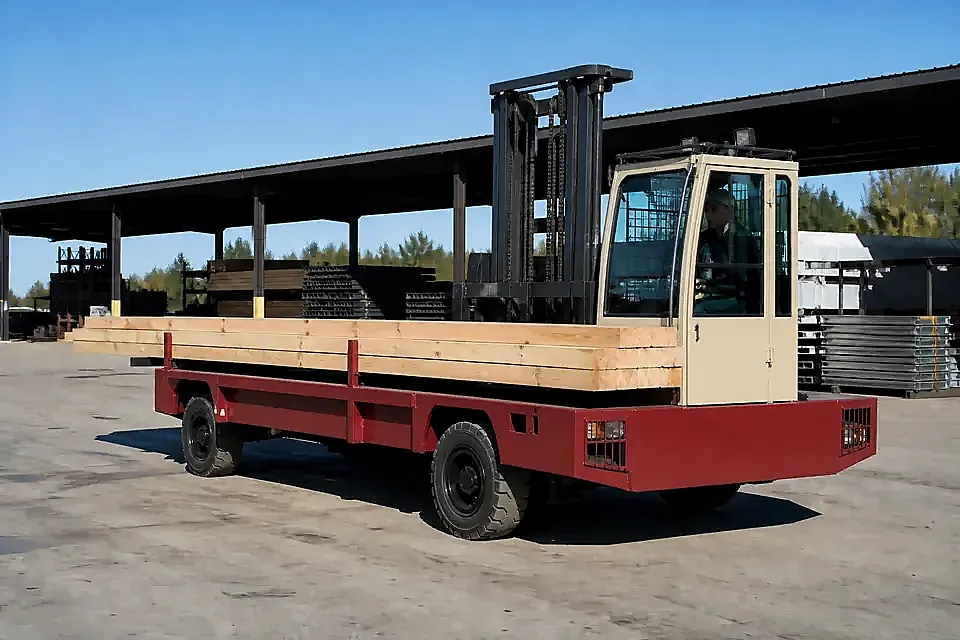
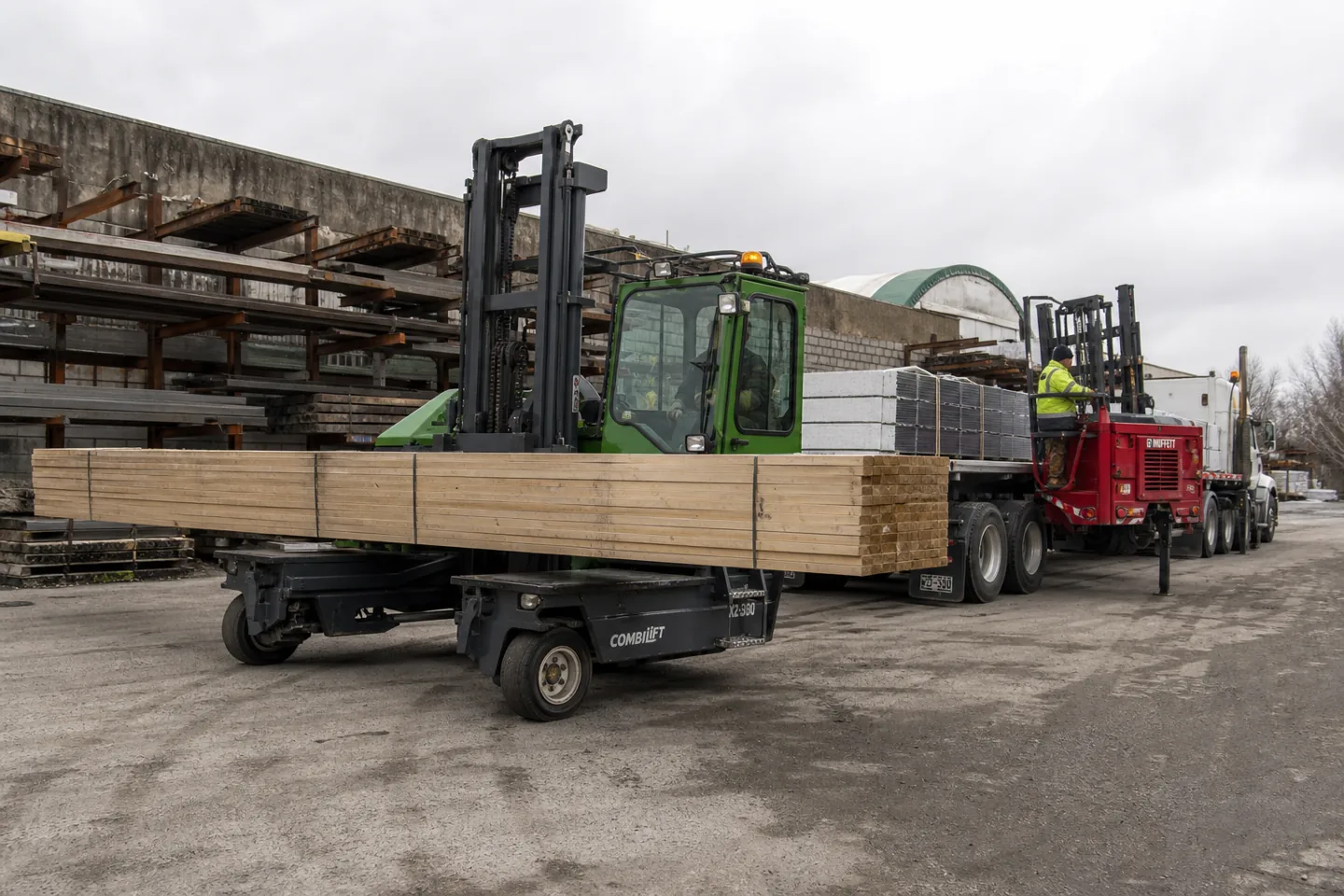
Side loader selection depends on material length, load weight, lift height, travel surface and storage layout. Because the load rests along the machine deck, these forklifts can move timber, pipe and steel without the wide turning envelope of a front-loading truck.
Cab orientation, deck width, mast travel, tire configuration and indoor or outdoor use should be documented. Multi-directional alternatives may be useful where long loads must travel in more than one direction through tight facilities.
Businesses comparing side loader forklifts for sale should define the application before comparing advertised cost. For current availability and an application-specific estimate, request side loader forklift prices based on the machine, condition, configuration and delivery location.
Start with the work rather than a badge on the counterweight. Use the forklift equipment guide to compare related machine types, then review available forklift inventory, forklift rental options and equipment financing around the actual load and operating schedule.
- Long-load deck and side-facing mast
- Lumber, pipe and steel applications
- Indoor and outdoor configurations
- New, used and rental equipment sourcing
Popular side loader forklifts brands and models
Frequently compared equipment includes Combilift C-Series, Hubtex MQ Series and Baumann GX Series side loaders. A recognizable model family is a useful starting point, but model numbers do not replace an application review. Capacity at height, load center, attachment weight, aisle or access limits, surface conditions, power source and local parts support determine whether a specific truck will perform safely and productively.
Compare equipment options
Match the machine to the load and facility
Share the load, lift height, surface, access limits, ZIP code and required date to narrow the field.
Where are side loader forklifts commonly used?
Side Loader Forklifts are regularly evaluated for lumber yards, steel service centers, pipe distribution, extrusion plants, building-material suppliers and long-load warehouse aisles. The best configuration is the one that can move the defined load through the real route without creating clearance, stability, charging, ventilation or operator-visibility problems.
How do you find the right side loader forklifts?
Rated capacity alone does not define equipment fit. Confirm usable capacity at the required lift height and load center, including any attachment weight. Measure the narrowest aisle, doorway and turning point on the travel path. Document overhead restrictions, grades, floor or ground conditions, shift length and energy access. These details help distinguish equipment that merely looks suitable from a machine that can complete the work consistently.
Steele Forklift supports businesses comparing forklift equipment in Syracuse, Central and Upstate New York, as well as national buyers through its broader forklift dealer network.
Should you buy, rent or finance this forklift equipment?
New equipment can support a specific mast, attachment, power package or long ownership plan. Used forklift equipment may reduce acquisition cost when hours, service history and specifications align with the application. Rental is often practical for seasonal demand, temporary replacement and project work. Financing can align acquisition cost with operating budgets. Review the practical differences in the forklift buying and rental guide.
What should be included in your forklift request?
Share maximum load weight and dimensions, load center, target fork or platform height, indoor or outdoor environment, floor or ground conditions, aisle and doorway limits, attachment needs, ZIP code and required date. Include expected hours per shift and whether the equipment must enter trailers, containers or elevators. The accurate forklift quote checklist explains why these details matter.