Your forklift tire decision starts at floor level. A smooth warehouse aisle, an uneven loading yard and an unprepared construction site place different demands on a truck. Tire appearance isn’t enough to choose between them.
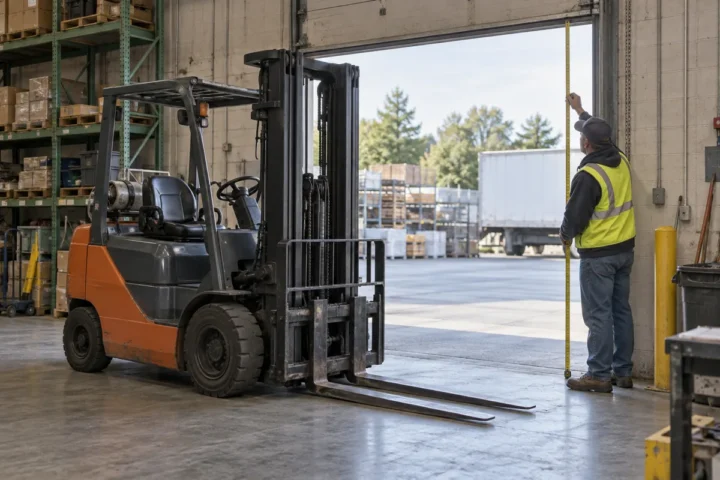
When comparing pneumatic vs cushion forklift tires, describe the complete route, including dock approaches and outdoor transitions. The truck must suit its surface, clearance and load requirements together.
Where do cushion forklift tires work best?
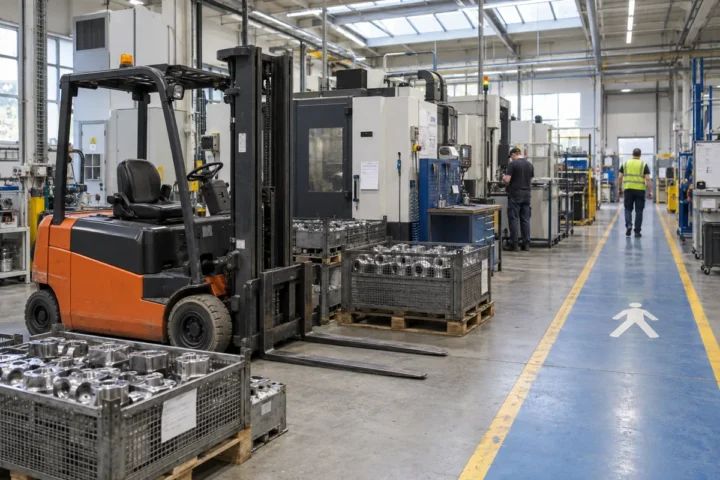
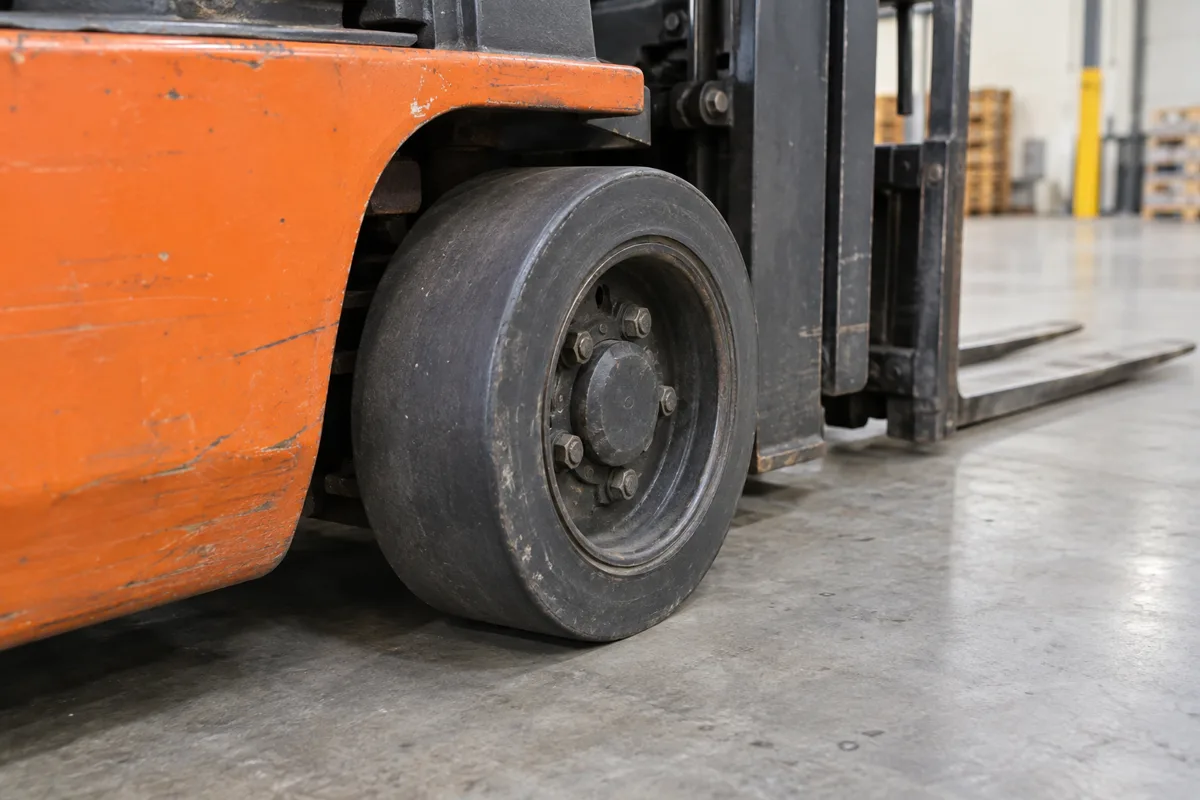
Cushion tires are solid rubber mounted on a metal band. They’re commonly used on compact trucks working on smooth indoor floors and suitable paved surfaces. The smaller tire and chassis arrangement can help in warehouse layouts, but check the actual turning radius and aisle requirement.
Don’t assume a cushion truck can handle a yard simply because part of the route is paved. Broken pavement, thresholds, slopes and debris need an application review. Compare the complete truck specifications in the forklift equipment guide.
Are pneumatic forklift tires always air-filled?
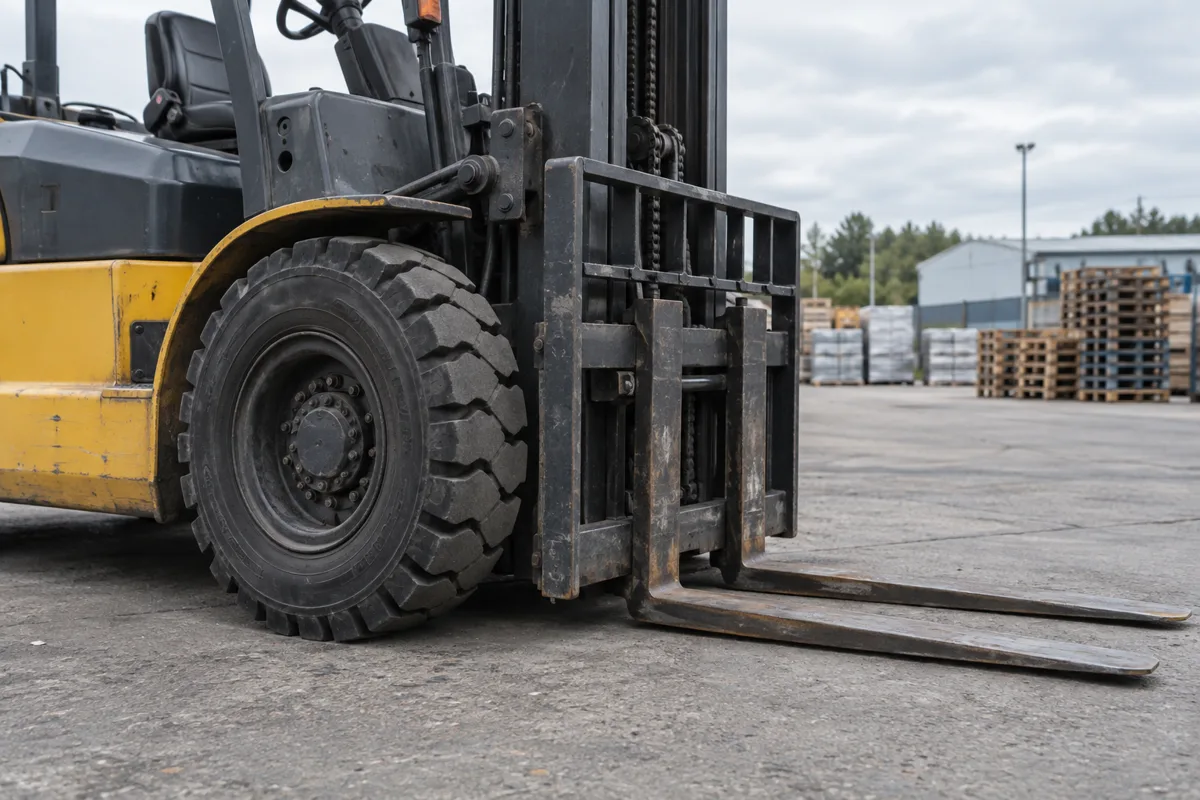
No. Pneumatic-style tires can be air-filled or solid. Solid pneumatics resist punctures; air-filled tires have inflation and puncture considerations. Both require the correct tire specification for the machine and its work.
Pneumatic-tire industrial forklifts are often considered for mixed indoor-outdoor routes and yards. That doesn’t make every pneumatic truck suitable for mud, unstable ground or a construction site. For unprepared surfaces, evaluate purpose-built rough-terrain forklifts and the site’s conditions.
Can I change a cushion forklift to pneumatic tires?
Don’t treat it as an ordinary tire replacement. Forklifts are designed around particular tire and wheel arrangements. Ask the manufacturer or qualified dealer about the exact model before considering a conversion. Ground clearance, geometry and safe operation may be affected.
The same caution applies when reviewing used forklifts for sale. Buy a suitable configuration rather than budgeting for an unconfirmed conversion after delivery.
What belongs in a forklift tire quote?
Provide model and serial number, current tire markings, wheel position and photos. Ask whether the quote includes installation, travel, disposal and any required wheel work. Non-marking requirements should be confirmed with the facility and tire supplier.
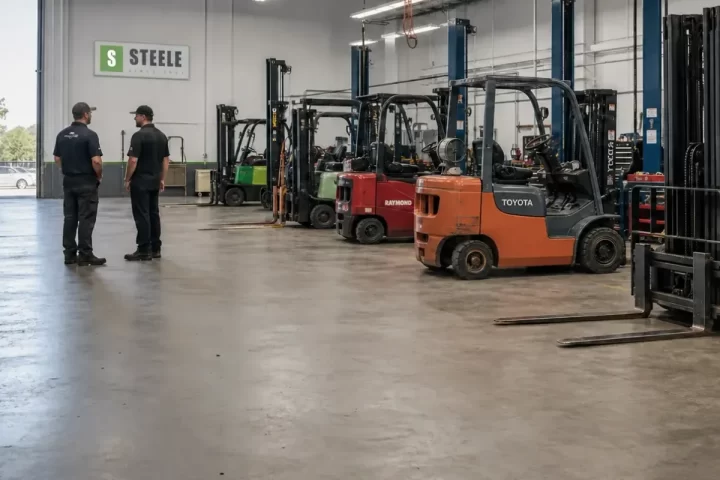
Check wear, chunking and damage through your inspection process; have unsafe equipment evaluated before use. For seasonal work, specify the surface when comparing forklift rental options, too. A low rental rate isn’t useful if the delivered truck can’t work on your route.