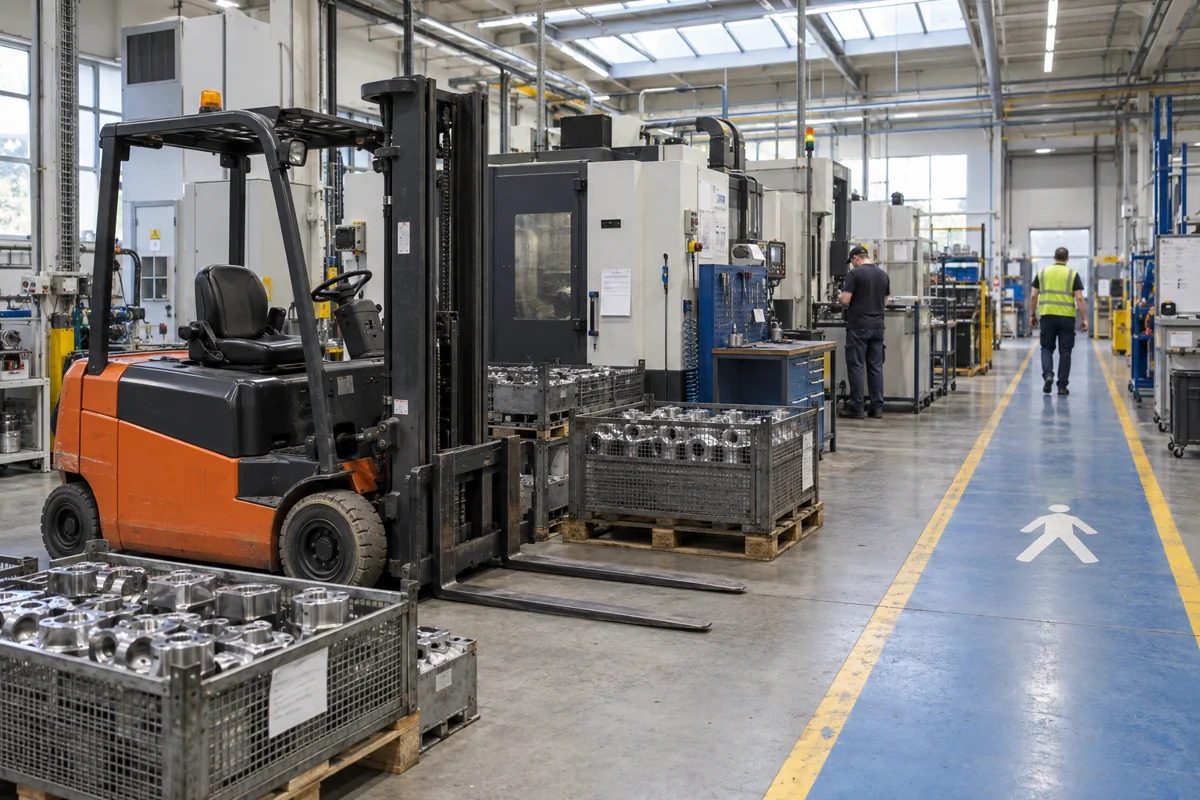
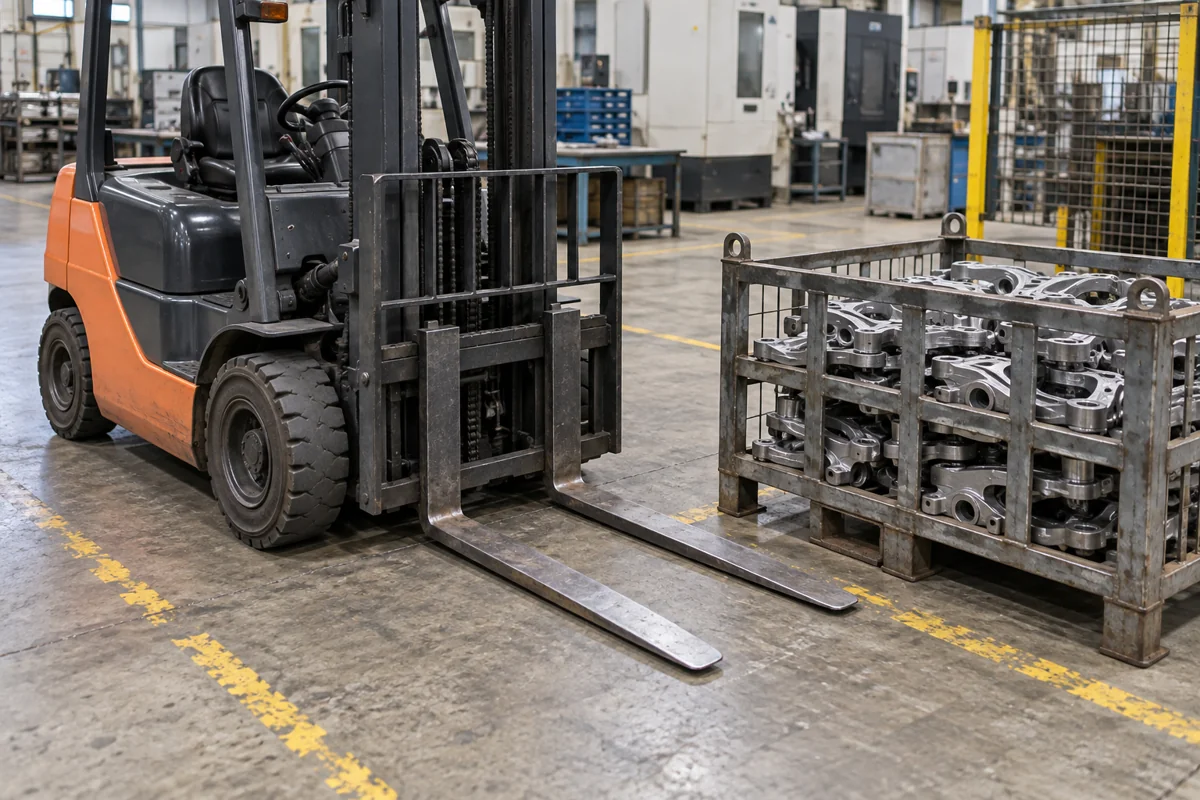
The load on a manufacturing floor isn’t always a tidy pallet. It may be a steel stillage, a fixture or a bin of components with most of its weight concentrated at one end. That’s why a nominal truck capacity is only the start of the buying conversation.
Specify forklifts for manufacturing plants around the load
When comparing forklifts for manufacturing plants, supply the heaviest regular load, dimensions, lifting points and required height. Identify irregular or occasional loads separately. Ask the supplier to confirm capacity with the actual forks or attachment and load center you intend to use.
A wider stillage may need different fork spacing. An attachment may alter the truck’s usable capacity. Neither should be treated as a minor accessory added after the truck has been selected. The forklift buyer’s guide helps organize the information a supplier needs.
Follow one load through the plant
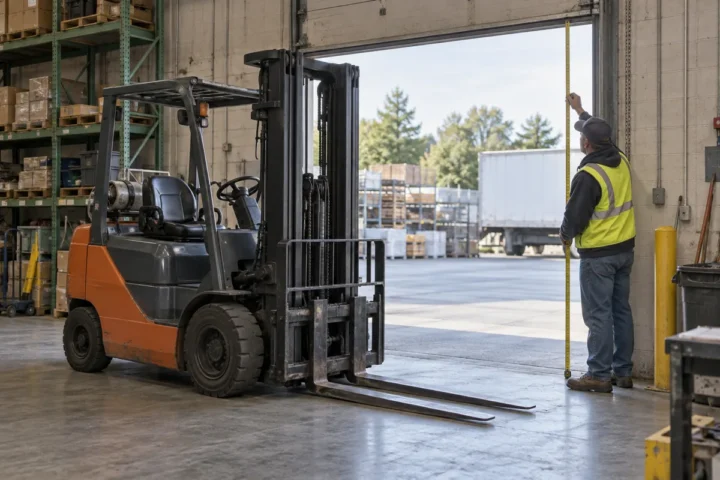
Trace the route from receiving to the production cell and onward to dispatch. Measure the narrowest turn, overhead restrictions and floor transitions. Note where pedestrians, carts and production equipment meet that route. A truck that fits the aisle may still have too little room to position the load at the machine.
Compare electric forklifts with the site’s charging arrangements and shift pattern in mind. If you are considering internal-combustion forklifts, discuss the actual operating environment and its ventilation and exposure requirements with the appropriate site professionals.
Do we need a special attachment for manufacturing loads?
Possibly. Show the supplier how the load must be picked up and placed, including any need to rotate, clamp or position it. Require an approved configuration and its resulting capacity information. Don’t assume a standard truck can safely handle a custom lifting arrangement because the load weighs less than its headline rating.
Try the proposed configuration where possible
A suitable trial can help, if the rental’s configuration represents what you plan to buy. Confirm the load, attachment, tire arrangement and operating limits first. Discuss forklift rental availability rather than assuming any temporary truck will provide a meaningful comparison.
Maintenance access deserves a place in the decision too. Ask who supports the proposed equipment, what planned service involves and how a breakdown would affect production. A low purchase price loses its appeal quickly if a critical cell can’t receive materials.
Have your supervisor prepare a load photograph, dimensions and a marked route plan. Send those with a manufacturing forklift pricing request, and ask each supplier to explain the configuration it recommends. You’ll be comparing machines against the same job.