
What information helps find the right forklift?
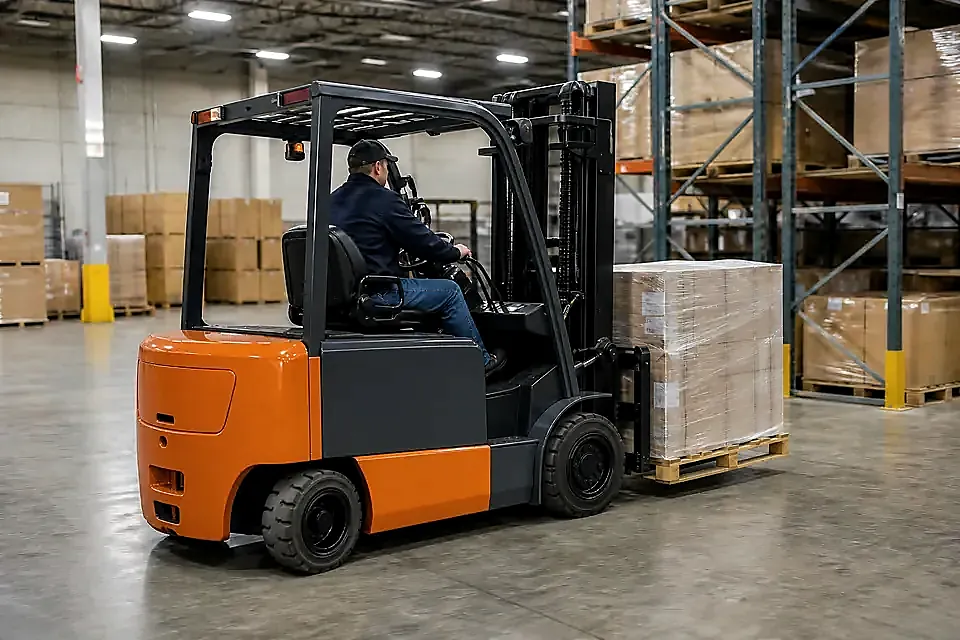
A productive forklift search begins with the work rather than a brand name or advertised capacity. Record the maximum load weight, load dimensions, load center, required fork height, clear aisle width, doorway height, overhead restrictions and operating surface. Our forklift equipment guide explains how common forklift types address different warehouse, yard and jobsite requirements.
Daily operating hours, shifts, charging or fuel access, grades, ramps, travel distance and attachment needs can change the practical choice. Include the delivery ZIP code and required date so equipment availability and transportation can be evaluated with the specifications.
How much forklift capacity do you need?
Headline capacity is only a starting point. Capacity is tied to a stated load center and can change when the load is longer, the mast is raised or an attachment moves the load forward. Provide the heaviest real load and its dimensions. A supplier should evaluate usable capacity at the required height and configuration.
Buying too little capacity creates an obvious safety and productivity problem. Buying far more than necessary can add cost, size and energy use while reducing maneuverability. The goal is appropriate capacity with a sensible operating margin.
Which forklift power source fits the operation?
Electric forklifts are widely used for indoor warehouses, manufacturing and applications that value lower point-of-use emissions and quieter operation. Battery chemistry, charger capacity, opportunity charging and shift pattern should be considered together.
Propane and diesel forklifts can support docks, yards, lumber operations and demanding duty cycles. Fuel availability, emissions policies, ventilation and maintenance capabilities belong in the decision.
Which forklift tires match the working surface?
Cushion tires provide a compact footprint for smooth indoor floors and paved applications. Pneumatic and pneumatic-style tires add clearance and traction for docks, yards and variable surfaces. Rough-terrain machines use larger aggressive tires and higher-clearance chassis for unprepared ground.
How do mast height and aisle width affect selection?
Measure the highest placement point, pallet height and required clearance. Document lowered mast height for doors, trailers and overhead restrictions. Counterbalance trucks need room to turn the load into position. Reach trucks serve higher-density rack and narrow aisles, while articulated equipment can support tighter storage plans.
Which forklift attachments are required?
Side shifters, fork positioners, clamps, rotators, push-pull attachments and specialty forks can improve handling for the right load. Attachments add weight and may change effective load center, so include them when capacity is evaluated.
Should you buy a new or used forklift?
New forklifts can provide current technology, warranty coverage, predictable configuration and a longer planned service life. Used forklifts may reduce acquisition cost and lead time when condition, hours, mast, tires, battery or fuel system and attachments fit the job. Review service history, leaks, mast channels, chains, forks, brakes, steering, safety equipment and data plate information. Use the forklift inventory categories to organize a current-equipment request.
When should a business rent a forklift?
Forklift rental options can support seasonal peaks, projects, temporary replacement and uncertain long-term demand. Compare the rental period, included hours, delivery and pickup, fuel or charging responsibility, maintenance, damage policies and extension cost.
How does forklift financing affect the purchase?
Forklift financing can preserve working capital and align payments with the useful life of a forklift. Compare term, rate, fees, down payment, ownership structure and early-payoff provisions with qualified financial and tax advisors.
What determines total forklift ownership cost?
Total cost includes purchase price, fuel or electricity, batteries and chargers, maintenance, tires, repairs, downtime, training, attachments, insurance, facility changes and expected resale. Utilization matters: a lower-priced truck that creates recurring downtime can cost more than a better-supported alternative.
What are the seven common forklift classes?
Forklift classes help organize equipment by power and operating design. Class I covers electric motor rider trucks. Class II includes electric narrow-aisle equipment such as reach trucks and order pickers. Class III covers electric hand and hand-rider trucks. Class IV and V are internal-combustion trucks with cushion and pneumatic tires respectively. Class VI includes electric and internal-combustion tractors, while Class VII covers rough-terrain forklift trucks. OSHA’s powered industrial truck types guide provides a useful official overview.
Class alone does not select the machine. Two trucks in the same class can differ in capacity, mast, turning radius, battery, tire, attachment and intended environment. Use class as a first filter, then return to the load and facility measurements.
How should a warehouse choose an electric forklift?
Electric equipment is common where operators value low point-of-use emissions, lower noise and controlled indoor use. The truck, battery and charger must be planned as one system. Record shift length, break schedule, travel distance, lift cycles, cold-storage exposure and available electrical service. A single-shift application may charge during off hours; a multi-shift operation may need battery changing, opportunity charging or a lithium-ion strategy supported by the manufacturer.
Ask who owns the battery, how remaining capacity is documented and whether the charger matches battery voltage, chemistry and connector. For a used electric forklift, a clean-looking truck does not guarantee a healthy battery. Request test information and budget realistically for replacement.
When is propane or diesel forklift power practical?
Propane counterbalance forklifts offer quick refueling and familiar performance for mixed indoor-outdoor work where facility rules and ventilation permit. Diesel equipment is commonly considered for outdoor yards, heavy loads and sustained industrial duty. Fuel storage, exhaust exposure, noise, climate, maintenance skill and operating policy all belong in the comparison. The U.S. Department of Energy has published a full fuel-cycle comparison of forklift propulsion systems that can help teams frame energy questions.
What should buyers inspect on a used forklift?
Start with the data plate and confirm model, serial number, rated capacity, load center, mast and approved attachments. Inspect forks for wear, repairs and unequal height. Look at chains, rollers, mast channels, carriage, hoses and cylinders. Test steering, brakes, parking brake, tilt, lift, side shift, lights, horn, alarms, restraint and all controls. Check tires for chunking, flat spots and remaining life. Look underneath for active leaks after the truck has operated.
Hours need context. Idle time, harsh environments, short repetitive cycles and poor maintenance can matter as much as the meter. Request service records when available and ask whether major components were repaired or replaced. For internal-combustion machines, evaluate cold starting, smoke, noise, cooling and transmission behavior. For electric equipment, inspect cables, connectors, corrosion and charger compatibility and obtain a battery evaluation. When the purchase is material, arrange an independent inspection by a qualified technician.
How do forklift prices vary?
Forklift prices move with capacity, power source, mast height, tires, attachments, battery and charger, brand, age, hours, condition, warranty, freight and regional supply. A basic warehouse truck and a high-capacity outdoor forklift are not comparable purchases. Used equipment can range widely because two machines with the same model designation may have very different histories and remaining component life.
Ask for a written equipment description rather than relying on a headline price. Confirm whether freight, taxes, battery, charger, propane tank, forks, side shifter, inspection, warranty and delivery are included. Rental pricing likewise depends on equipment class, capacity, term, allowed hours, location and transportation. Current forklift prices should be requested for the exact application; static national averages are planning figures, not quotes.
What should a forklift rental agreement clarify?
Confirm the exact machine class or an acceptable equivalent, rated capacity, mast, tires, attachments, rental period, allowed usage and expected delivery window. The agreement should explain freight, pickup, fuel or charging, preventive maintenance, field repairs, damage responsibility, cleaning, extension rates and what happens if the machine is down. For construction and outdoor rentals, describe grades, ground conditions and site access before dispatch.
How should businesses evaluate forklift financing?
Compare total amount financed, down payment, term, rate, fees, payment timing, ownership, end-of-term obligations and early payoff provisions. A low payment can conceal a longer term or different residual structure. Match the financing period to expected useful life and utilization rather than stretching payments beyond the equipment plan. Tax treatment depends on facts and current law; the IRS explains depreciation of qualifying business machinery in Publication 946. Buyers should review their situation with qualified financial and tax professionals.
What safety and training obligations affect a forklift purchase?
Equipment selection does not replace the employer’s safety responsibilities. OSHA’s powered industrial truck standard, 29 CFR 1910.178, addresses designations, operating requirements, maintenance and operator training. Employers must evaluate the workplace, use equipment suitable for the environment and provide training appropriate to the truck and conditions. Modifications that affect capacity or safe operation require proper approval and updated markings.
Plan pedestrian separation, dock conditions, trailer restraint, lighting, charging or fueling areas, inspection practices and removal of unsafe equipment from service. Verify that the data plate remains legible and reflects approved attachments. Steele Forklift can help organize equipment questions, but the employer and its qualified safety advisers remain responsible for compliance and safe operation.
How should delivery and facility access be planned?
Measure gates, roads, dock approaches, doors, ceilings and indoor turning areas. Identify whether the delivery truck needs a dock, ramp or ground unload and whether appointments, escorts or site credentials are required. Confirm the receiving contact, hours and a safe unloading area. For remote jobsites, describe surface strength, slope, mud, overhead lines and weather exposure. A correct machine can still become a costly problem if it cannot enter or be unloaded at the site.
Which forklift fits a distribution warehouse?
A distribution center may use several equipment types because receiving, reserve storage, case picking and shipping are different jobs. Sit-down counterbalance forklifts commonly load trailers and move pallets in open areas. Reach trucks work in narrower rack aisles and at greater storage heights. Order pickers bring an operator to case or item levels, while electric pallet trucks move loads over longer horizontal paths.
Map the workflow before replacing equipment one-for-one. Measure travel distance, rack height, pallet weight, aisle width, dock plates and the number of touches each load receives. A truck that is efficient at the dock may be inefficient in storage. Standardizing batteries, controls or service parts can help, but only after each machine is matched to its task.
What should construction and lumber operations consider?
Outdoor work adds ground clearance, traction, grade, weather and load-shape questions. Building materials may be long, flexible or carried with specialized forks. Lumber yards frequently need pneumatic tires and a stable counterbalance machine that can work over imperfect pavement. Construction sites may require a rough-terrain forklift or telehandler, but forward reach and boom angle change capacity. The load chart for the exact configuration matters.
Describe soil, gravel, mud, slopes, curbs, overhead lines and access routes. Confirm whether stabilizers, enclosed cabs, lighting or specific attachments are required. Never treat a warehouse forklift as a substitute for equipment designed for an unprepared jobsite.
How do food, cold-storage and clean facilities change the choice?
Food and pharmaceutical operations may prioritize clean electric power, facility-approved tires, washdown practices and materials suitable for controlled environments. Cold temperatures affect battery performance, hydraulic behavior, condensation and operator comfort. A truck repeatedly moving between freezer and ambient areas can experience moisture-related challenges that need to be discussed with the equipment and battery providers.
Document sanitation rules, temperature, shift length, door cycles and charging location. Confirm whether components, lubricants or attachments must satisfy facility-specific requirements. The cleanest-looking option is not automatically the correct truck; capacity, braking, traction and battery reserve still have to support the work.
How should a business plan forklift maintenance?
Before buying, decide who will perform planned maintenance and emergency repairs. Ask about service coverage, response expectations, parts availability and whether technicians support the specific model and power system near the operating location. Establish daily inspection procedures and a method for operators to report defects. OSHA requires unsafe powered industrial trucks to be removed from service until restored to safe operating condition.
Maintenance intervals depend on the manufacturer, environment and usage. Dust, cold storage, corrosive material, heavy attachments and multi-shift work can change the plan. Track hours, repairs, tires, battery performance and downtime by asset. Good records help a business recognize when a truck remains economical and when replacement is becoming the stronger decision.
When should a fleet be standardized?
Standardization can simplify training, controls, parts, chargers and service relationships. It may also improve operator familiarity and make spare equipment more useful across departments. The benefit is strongest when applications are genuinely similar. Forcing one truck design into different jobs can erase those savings through lower productivity, premature wear or safety concerns.
Standardize where the work supports it: compatible batteries across similar electric trucks, common fork sizes, consistent safety features or a limited set of models for repeated applications. Preserve exceptions for cold storage, narrow aisles, outdoor yards, heavy loads and specialty attachments. A mixed fleet is not automatically inefficient; an unexplained fleet is.
What records should be kept after delivery?
Retain the purchase or rental agreement, data plate information, manuals, inspection documents, warranty terms, battery and charger records, attachment approvals, service history and operator-training records. Photograph the truck and attachments at receipt, record hours and note existing damage. For rentals, document fuel or charge level and condition before return.
Accurate records protect the operation, improve maintenance decisions and make future replacement planning easier. They also help a new manager or technician understand why the truck was selected and how it has performed. The buying process should leave the company with more than a machine; it should leave a clear equipment record.
What questions should you ask a forklift supplier?
- Why does this truck fit the stated load, height and operating surface?
- What capacity remains at the required height and load center?
- Which battery, charger, fuel system and attachments are included?
- What inspection, condition report, warranty or return terms apply?
- Who handles freight, setup, preventive maintenance and field repairs?
- What parts and service support are practical near the operating location?
- What is excluded from the quoted price or rental rate?
- What lead time and delivery assumptions should the buyer plan around?
How do you make the final forklift decision?
Put every serious option into the same comparison. List usable capacity, lift height, dimensions, power, tires, attachments, included equipment, condition, warranty, freight, expected maintenance and estimated operating cost. Eliminate any machine that misses a non-negotiable requirement. Then compare the remaining choices around total value, support and risk—not only acquisition price.
A good forklift decision should be explainable to the operator, maintenance team, safety manager and finance office. If the machine fits the work, the facility can support it and the ownership path makes sense, the decision is on solid ground. If important details remain unknown, pause and get them answered before the truck arrives.
What belongs in a complete forklift price request?
- Maximum load weight, dimensions and load center
- Required fork height and lowered mast clearance
- Clear aisle, doorway and overhead measurements
- Indoor, outdoor or mixed operating surface
- Power preference, daily hours and shifts
- Required attachments and fork dimensions
- New, used, rental or open-to-options preference
- Delivery ZIP code and required date