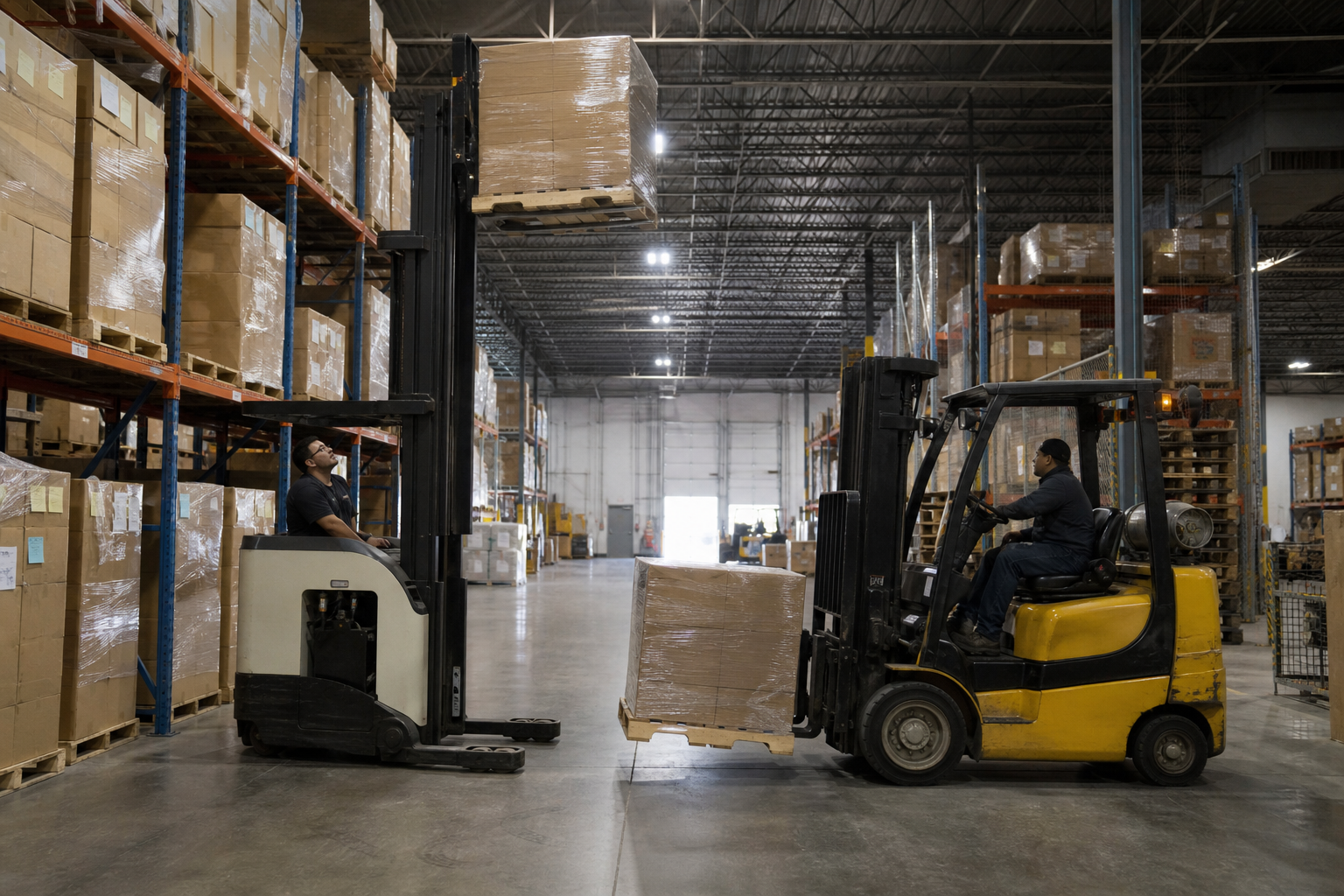
Reach trucks and counterbalance forklifts overlap just enough to create expensive mistakes. The purchase price matters, but the building, pallet and travel path decide which machine creates usable capacity.
Start with aisle and rack geometry
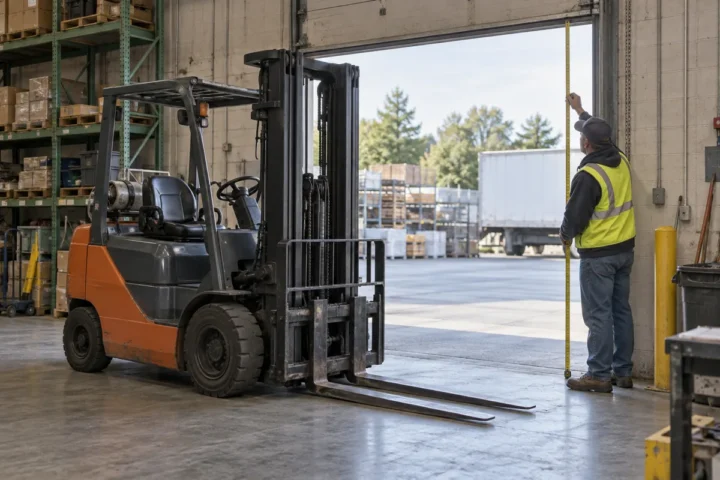
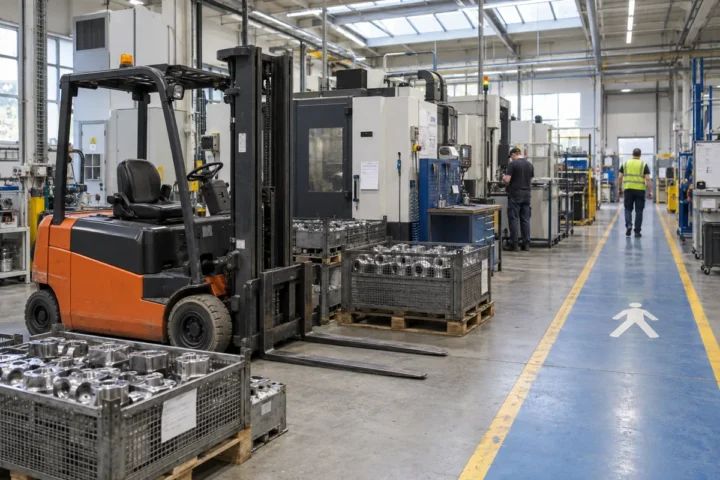
Measure clear aisle width at the tightest obstruction, not the drawing. Confirm pallet depth, overhang, beam height, sprinkler clearance and the required lift height. A reach truck can support narrower aisles and taller storage, but only when the rack and floor conditions cooperate.
Follow the full travel path
Counterbalance trucks are flexible at docks, staging and mixed indoor-outdoor work. Reach trucks are generally designed for smooth indoor floors and rack work. Map thresholds, ramps, dock plates and trailer entry before comparing models.
Compare capacity at height
Nameplate capacity is not the whole story. Mast, lift height, load center and attachments affect residual capacity. Review the manufacturer load chart for the actual configuration.
Build an ownership comparison
Include new or used purchase price, battery and charger, tires, planned maintenance, operator training and expected utilization. Browse forklift equipment types before requesting matched quotes.
Ready to compare practical options? Provide aisle width, top beam, pallet weight and travel path to compare correct truck classes and prices.
Frequently asked questions
Is a reach truck a forklift?
Yes, but it is a specialized warehouse truck designed around rack access and narrower aisles.
Can a reach truck unload trailers?
Many operations use counterbalance trucks at docks; verify manufacturer limits, floor, ramp and trailer conditions for any proposed use.
Which costs more?
Configuration, capacity, lift height, battery, condition and market matter; compare ready-to-work specifications.