An accurate forklift quote begins with an accurate description of the work. A request that says only “5,000-pound forklift” leaves critical questions about load center, mast, clearance, surface, power, attachments and utilization unanswered.
Use the forklift buyer’s guide as a worksheet, then send the same information to every supplier. Comparable inputs produce more comparable proposals.
Describe the load completely
Provide maximum and typical weight, length, width, height, pallet or container type, load center and stability concerns. Include unusual loads even if they are infrequent. Photographs and drawings help when dimensions, packaging or pickup points are difficult to explain.
Record every height and clearance
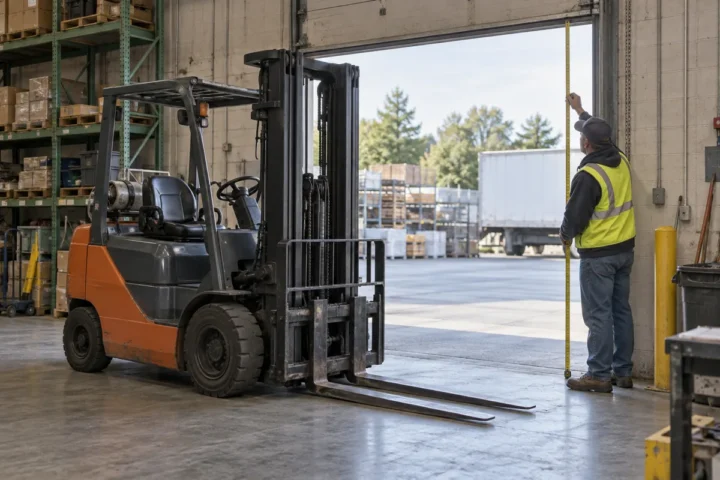
List required fork height, top rack beam, lowered mast clearance, overhead obstructions, doorway height, trailer opening and any elevator constraints. The mast must reach the work while still traveling through the building.
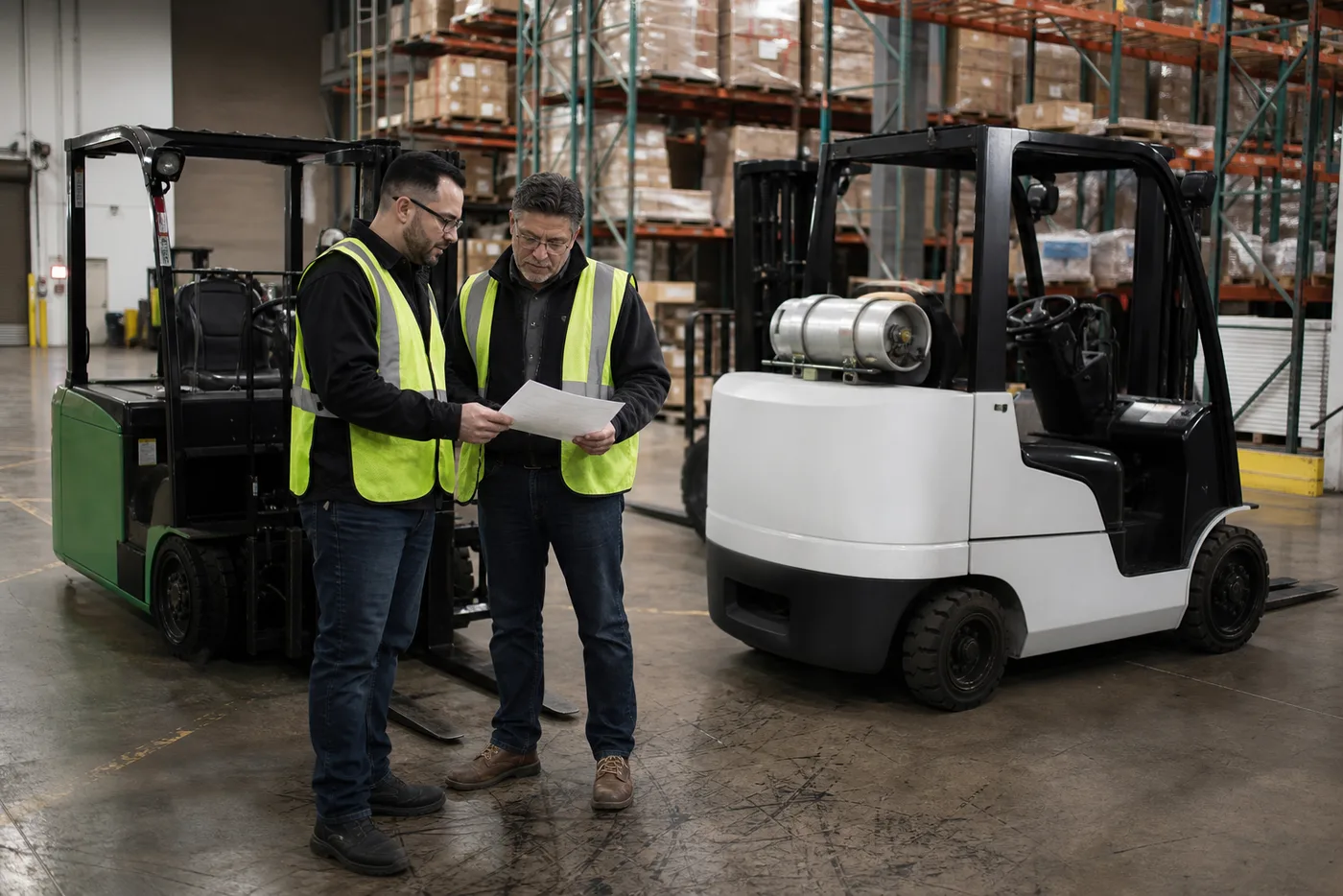
Measure aisles, surfaces and grades
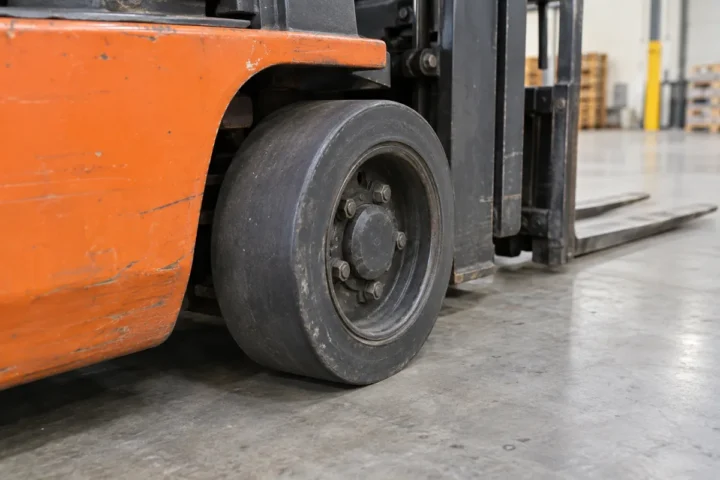
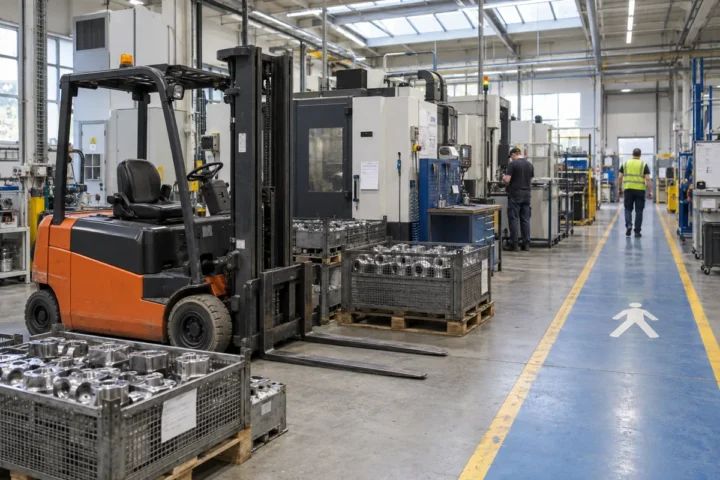
Provide clear aisle width, cross-aisle space, dock and trailer use, indoor floor condition, outdoor surface, ramps, grades and weather exposure. Tire, chassis and power recommendations depend on where the truck actually travels.
Explain utilization and energy access
State shifts, hours per day, days per week, peak season, travel distance and idle periods. For electric equipment, describe charging power and available breaks. For propane or diesel, explain fuel handling and indoor-outdoor use.
Define commercial and delivery requirements
Specify desired new, used or rental status; required date; project duration; financing interest; delivery location; unloading access; attachments; warranty expectations; and operator-support needs. Review the nationwide forklift locations path when coordinating multiple facilities.
Twelve details for a useful forklift quote
- Maximum and typical load weight.
- Load dimensions and load center.
- Required lift height.
- Lowest overhead clearance.
- Clear aisle and cross-aisle dimensions.
- Indoor and outdoor surfaces.
- Grades, ramps, docks and trailers.
- Shifts and annual operating hours.
- Preferred or available energy source.
- Every required attachment.
- New, used, rental or financing preference.
- Delivery location and required date.
Frequently asked questions
Do I need to know a forklift model?
No. Application facts are more important at the start; they allow the supplier to identify suitable models.
Why is load center required?
It affects leverage and usable capacity, especially with long or unusual loads.
Should I include occasional heavy loads?
Yes. Identify their frequency so the core fleet and rental or specialized options can be compared.
Can one quote cover several locations?
Provide each facility’s loads, measurements, hours and delivery requirements; do not assume they are identical.
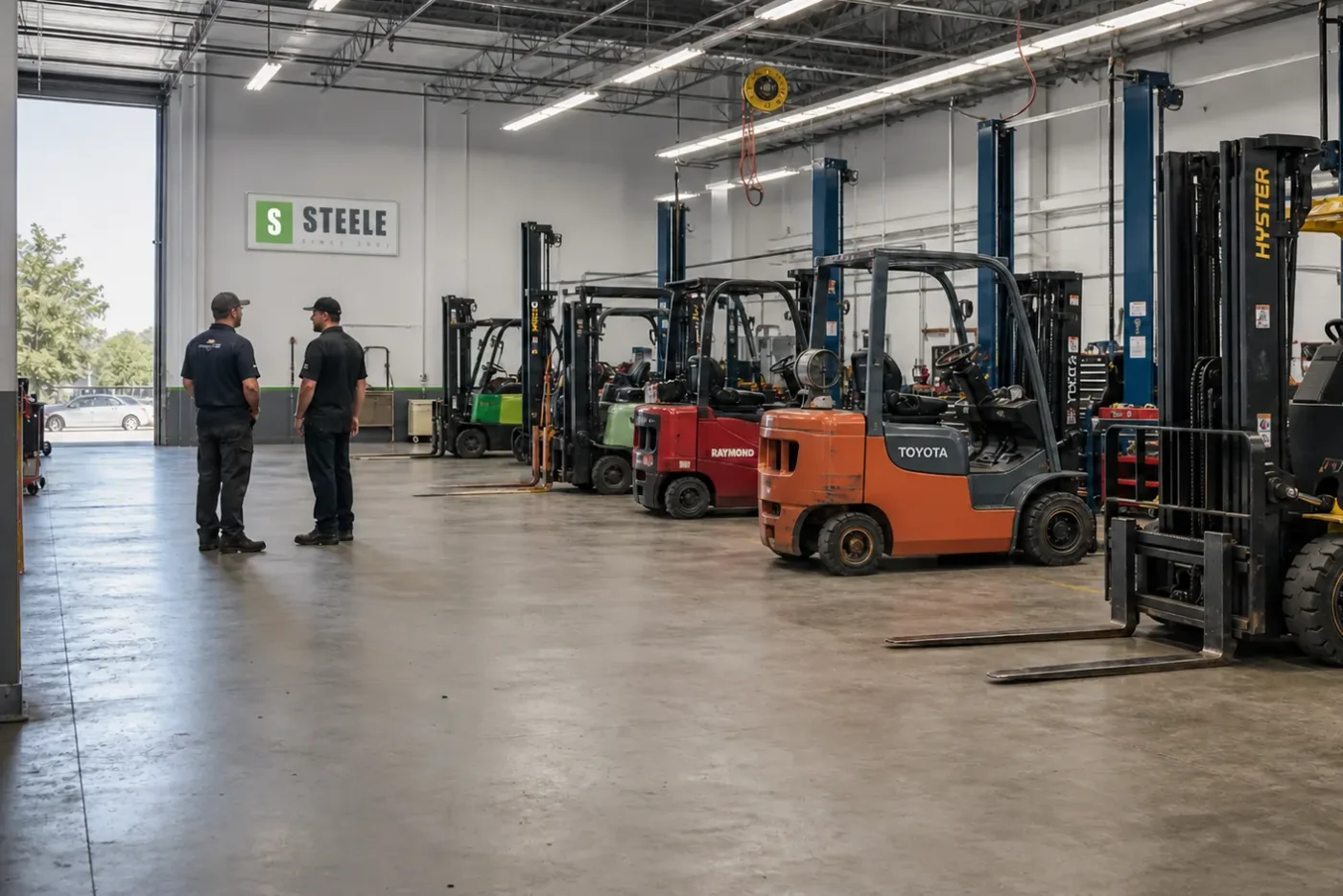
When the worksheet is ready, submit it through Steele Forklift’s forklift quote form for a properly matched comparison.