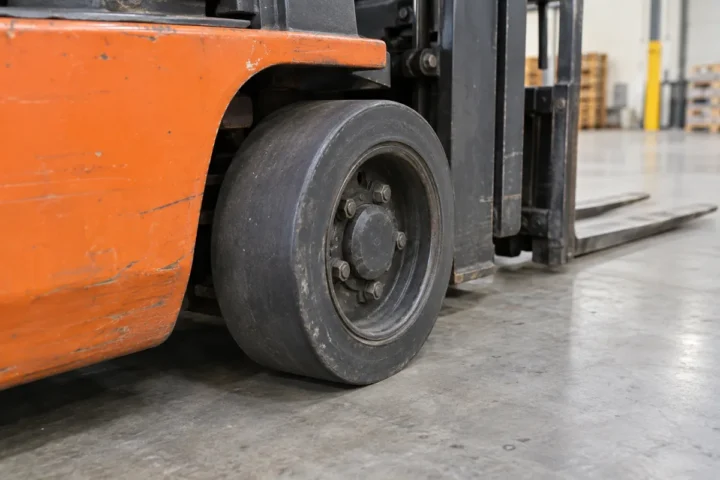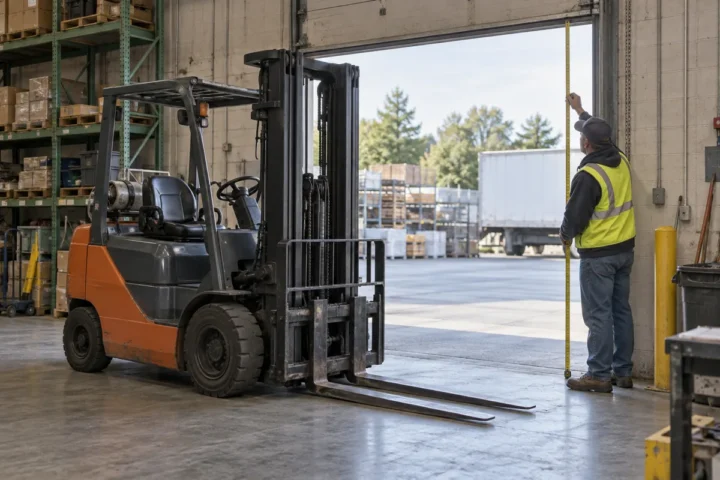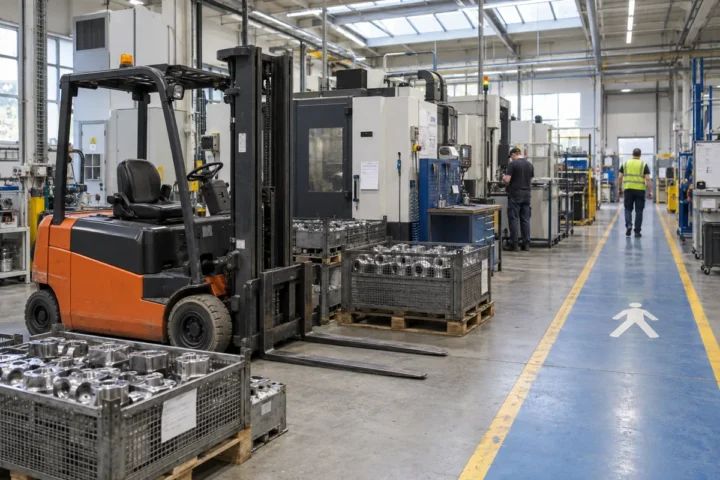
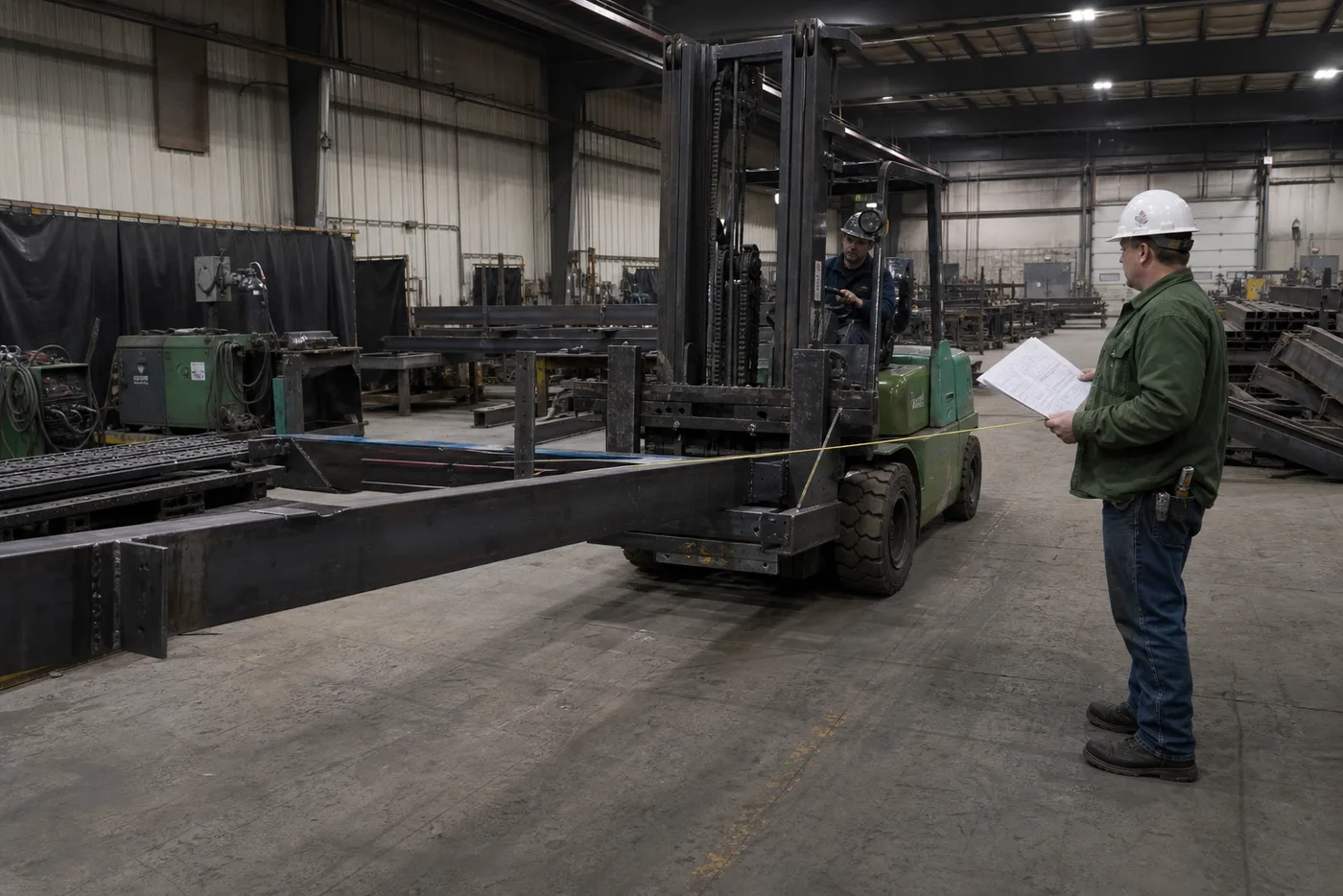
A forklift marked 5,000 pounds is not rated to lift every 5,000-pound object in every configuration. Capacity is tied to a stated load center, mast, lift height, attachments and other conditions shown on the data plate.
Unusual, long or offset loads require more than a weight estimate. Use Steele Forklift’s forklift selection guide to organize the application, then obtain a rating for the proposed configuration.
Load center changes the leverage
The farther a load’s center of gravity sits from the fork face, the greater the overturning moment. A long load can therefore exceed a truck’s safe capability even when its scale weight is below the nominal rating. Measure the full load depth and understand where its center of gravity actually falls.
Lift height can reduce usable capacity
Mast deflection and stability considerations can reduce capacity at higher elevations. Capacity charts may show different ratings by lift height. Warehouses should specify the highest beam and required fork elevation, including clearance needed to enter and withdraw from the pallet.
Attachments are part of the rating
Side shifters, fork positioners, clamps, rotators and long forks add weight and move the load forward. The truck data plate should reflect the installed attachment and resulting capacity. Swapping attachments without updated rating information creates a hidden mismatch.
The load itself may be unstable
Capacity is not the only question. Flexible, liquid, suspended, top-heavy or poorly secured loads can shift. Evaluate load condition, packaging, fork spacing, attachment contact and travel route. Operators need a documented method for nonstandard loads.
Use qualified information, not field guesses
Provide the equipment supplier with load drawings, weights, center-of-gravity information, maximum height and attachment details. When information is uncertain, stop and obtain it. Never “test” an unknown load by attempting the lift.
Capacity information to collect
- Maximum verified load weight.
- Load depth and center-of-gravity location.
- Required lift height and mast configuration.
- Fork length, spacing and every attachment.
- Data plate matching the final truck configuration.
Frequently asked questions
What is a 24-inch load center?
It means the rating assumes the load center of gravity is 24 inches forward from the reference face under stated conditions.
Do longer forks reduce capacity?
They can change load position and are often used with longer loads; the complete configuration needs an approved rating.
Can a forklift lift more at a lower height?
Some configurations have greater capacity at lower elevations; consult the correct capacity chart and plate.
Who can update a forklift data plate?
Use the manufacturer or an authorized qualified source for the configured truck and attachment.
For help matching a rated configuration, submit the load details through Steele Forklift’s forklift capacity request.