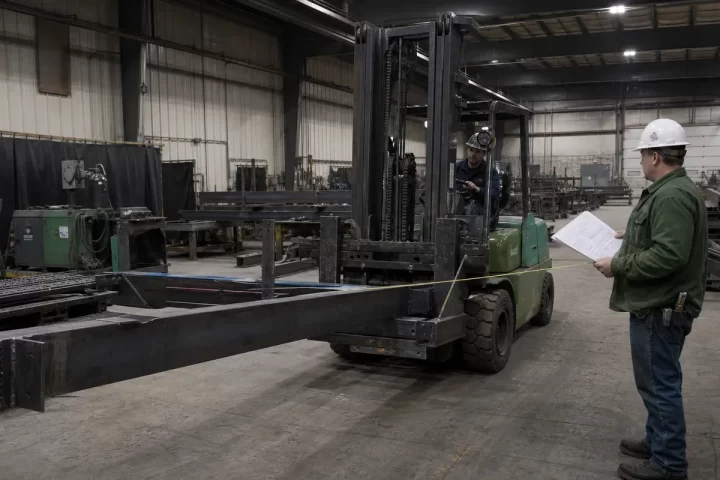
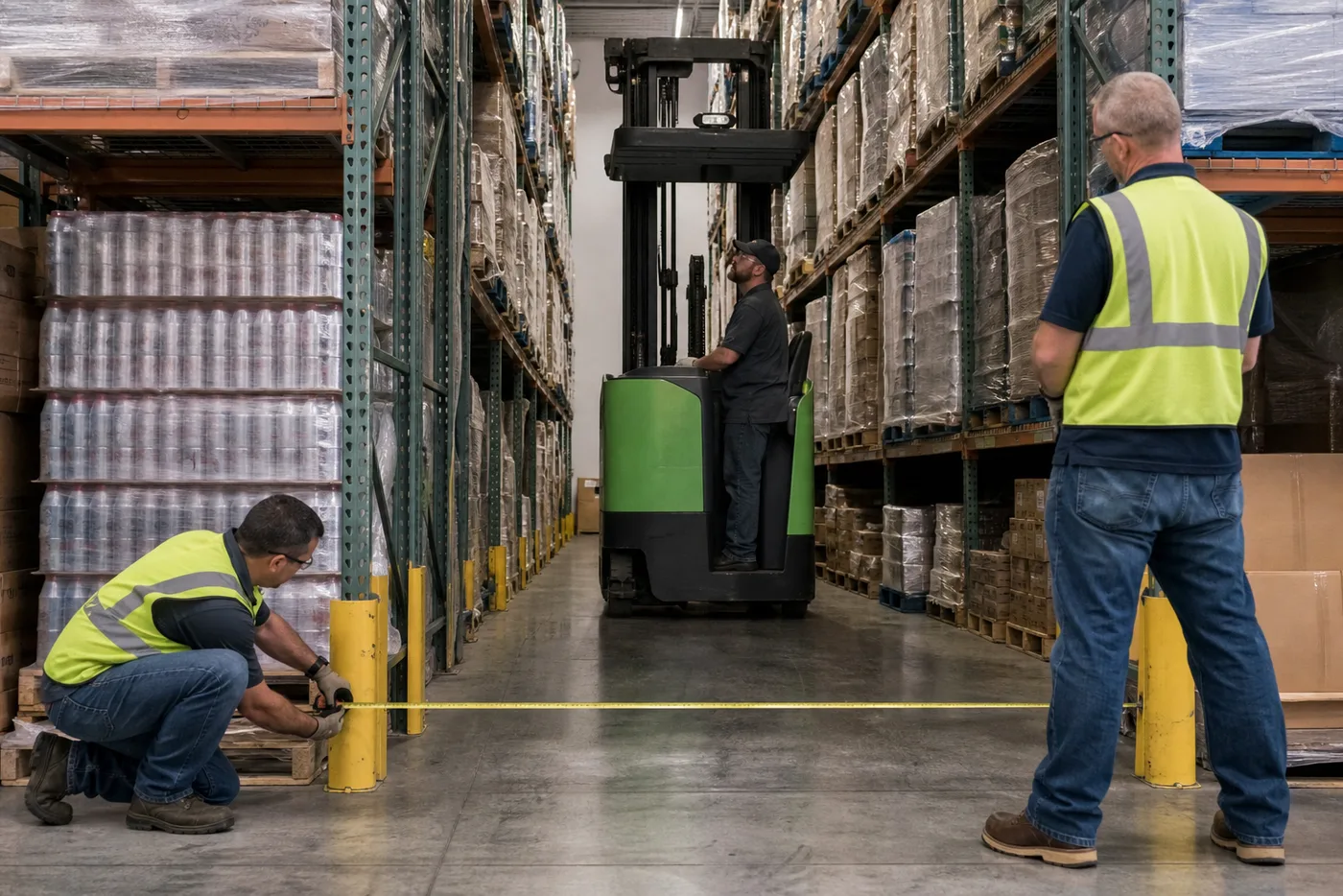
Aisle width is an application measurement, not a single number printed beside a forklift model. Truck geometry, load length, pallet condition, rack protection, guidance systems and operator clearance all influence safe maneuvering space.
Measure the building and the loads before selecting from electric warehouse forklifts. A few inches of unverified clearance can determine whether a proposed truck works smoothly or repeatedly damages product and racking.
Record the physical aisle correctly
Measure clear distance between the nearest permanent obstructions—not merely rack beam spacing. Include column guards, pallet overhang, sprinkler components, floor joints, curbs and staging that intrudes into the aisle. Check several locations because existing racks and floors may not be perfectly parallel.
Use the real load dimensions
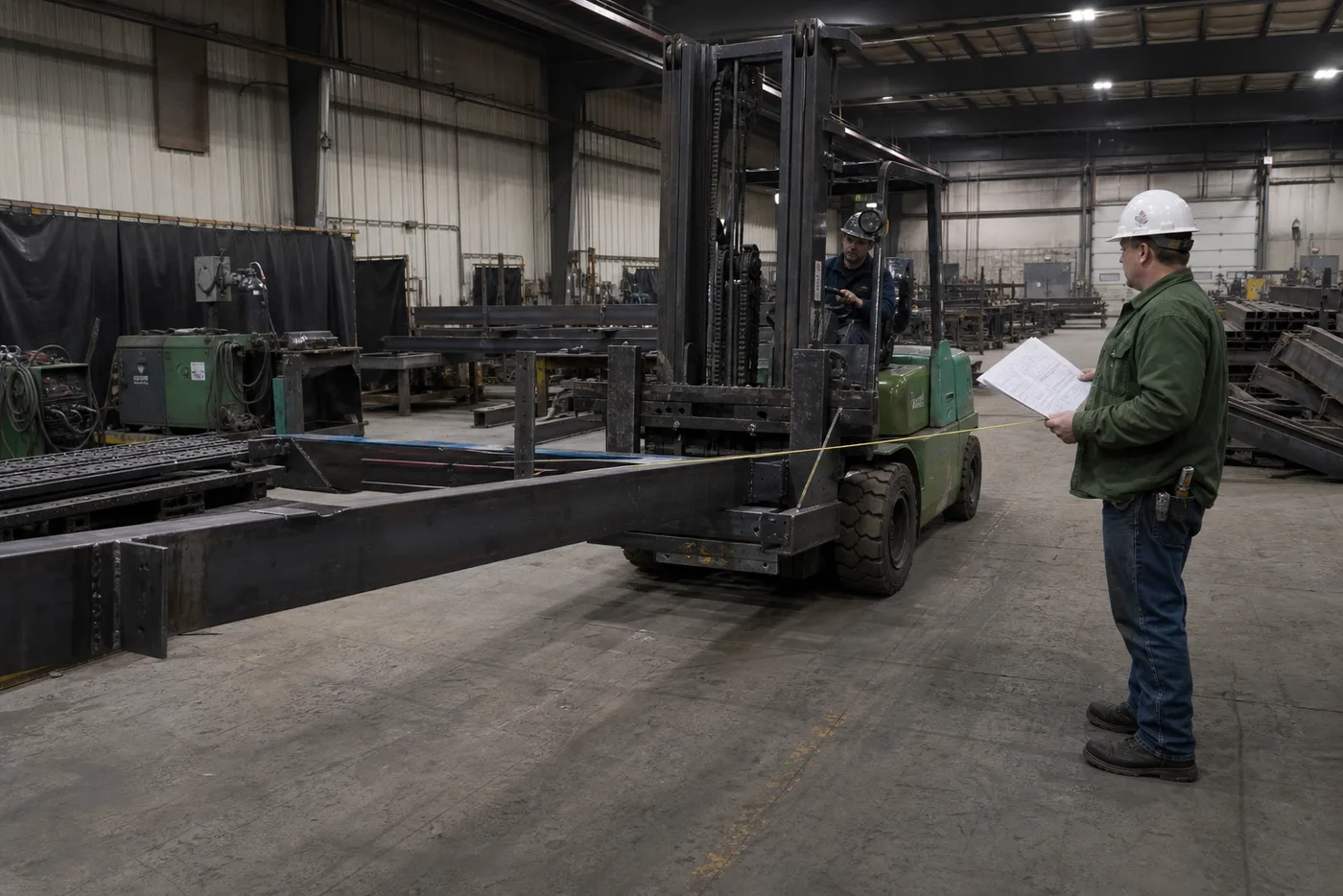
A standard pallet does not guarantee a standard load. Measure the longest and widest common unit load, including wrap, dunnage and overhang. A truck that handles a compact pallet may need more room with long product or an attachment. Load center and weight must also remain within the rated configuration.
Understand right-angle stacking
Manufacturers publish right-angle stacking dimensions under defined assumptions. A Raymond 7530 high-capacity reach truck, a Crown reach-truck family and a Toyota 8FBE three-wheel electric represent different geometries even when capacity appears similar. Compare the actual model assumptions with your load, fork length and required clearance; nominal truck width alone is not enough.
Protect productivity and tolerance
Designing to a theoretical minimum leaves little room for pallet variability, rack movement or imperfect approach. A practical allowance improves operator consistency and reduces contact. High-density layouts may justify guided equipment, rack changes or a controlled demonstration before capital is committed.
Test the route beyond the aisle
Verify cross aisles, dock approaches, trailer entries, elevators, doors, overhead obstructions and staging zones. The tightest point may be outside the storage aisle. Floor condition and grade can also change traction and usable capacity.
Warehouse measurement checklist
- Measure clear width at several aisle locations.
- Record maximum load length, width, weight and overhang.
- Document rack height and required fork elevation.
- Check cross aisles, doors, docks and overhead clearance.
- Validate the proposed configuration in the actual space.
Frequently asked questions
What does AST mean on a forklift specification?
It commonly refers to right-angle stacking aisle width under specified truck and load assumptions.
Are reach trucks always best for narrow aisles?
They are common in high-rack narrow-aisle work, but load, height, floor and throughput determine suitability.
Should pallet overhang be included?
Yes. Measure the actual unit load, not only the pallet deck.
Can a side shifter affect aisle planning?
Attachments can change geometry, weight and residual capacity, so use the configured specification.
Send the aisle, lift and load measurements through Steele Forklift’s warehouse equipment request for a practical shortlist.