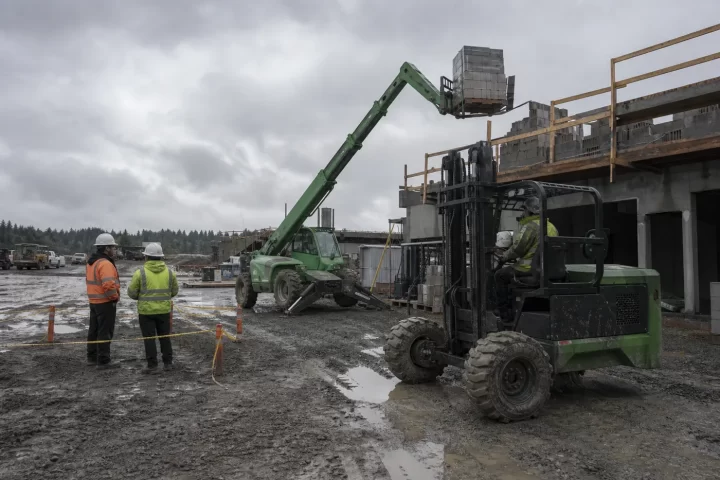
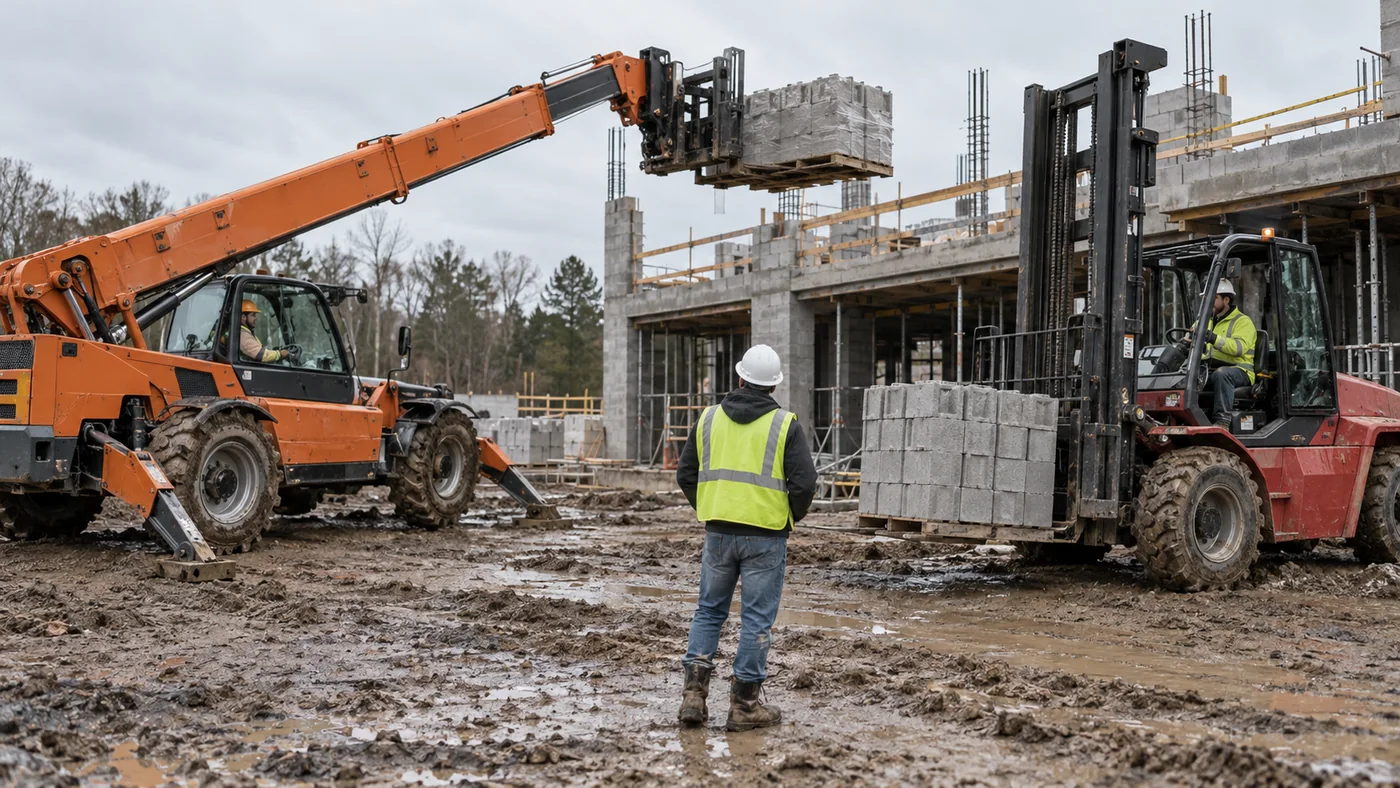
Rough-terrain forklift prices vary with capacity, reach, steering, tires, attachments and the site the truck must cross. To get prices that protect the work, request rough-terrain forklift pricing using the real load, lift path, ground conditions and project schedule.
Start with the load and placement point
Record the maximum load weight, dimensions, load center and required height. A telehandler may reach forward and over obstacles, while a straight-mast rough-terrain forklift follows a different lift path. The machine’s rated chart and approved attachments determine what it can safely handle in the planned configuration.
Review the rough-terrain forklift options and telehandler versus rough-terrain guide before comparing equipment prices.
Describe the ground, grades and access
Mud, gravel, ruts, slopes and incomplete roads affect traction and stability. Measure gates, travel routes and setup areas. If the machine must enter a finished slab or pass through a doorway, include those surfaces and clearances too.
Compare configuration, not just rated capacity
- Maximum lift height and forward reach
- Load chart with the intended attachment
- Two-wheel, four-wheel or crab steering
- Tire type and ground clearance
- Cab, heat, lights and weather protection
- Stabilizers, carriage and auxiliary hydraulics
The forklift attachment guide explains why an attachment can change effective capacity and pricing.
Add delivery, service and project duration
Large jobsite machines may carry meaningful freight charges. Ask where service comes from, what parts support is available and how downtime is handled. For temporary projects, compare weekly and monthly rental pricing with purchase or financing rather than assuming one path is always cheaper.
The forklift rental page and financing options support that conversation.
Should you buy more capacity than the current load?
Some reserve can support future work, but excessive size raises price, transport cost and maneuvering needs. Specify verified loads and a realistic growth range. Never use extra capacity as a substitute for reviewing the load chart and site conditions.
Use the forklift buyer’s guide to organize proposals. The best price comes from matching the machine’s actual configuration to the site, not from comparing headline capacities.