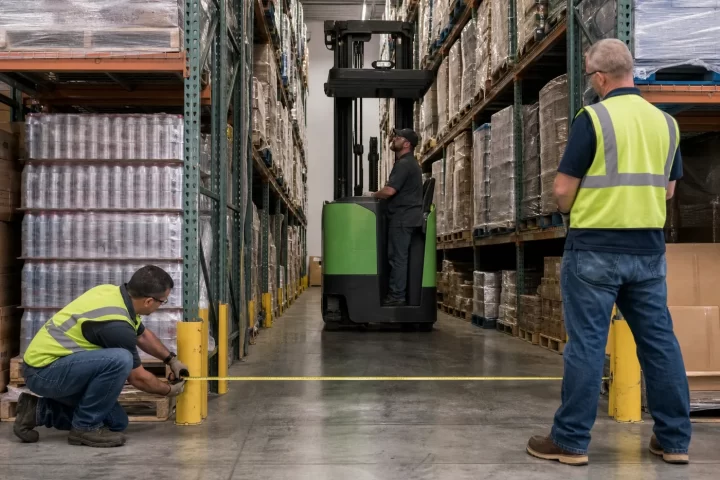
Cold storage is not an ordinary warehouse with a lower thermostat. Repeated travel between warm and cold zones introduces condensation, batteries deliver differently, controls must remain usable with gloves and small traction problems become bigger ones on wet floors.
Food and beverage operators commonly compare electric forklifts, reach trucks and powered pallet equipment as one handling system.
Specify temperature exposure by task
Record the coldest temperature, time spent inside, frequency of temperature transitions and whether the truck returns to an ambient charging area. Continuous freezer duty and short cooler entries are different applications. Ask how the proposed truck, battery and display package are prepared for that exposure.
A frozen-food distributor adding a second shift
A frozen-food distributor can cover one shift with conventional lead-acid charging, but the second shift removes the recovery window. The apparent choice is another battery. The better review also considers battery changing labor, heated components, opportunity charging, freezer-rated seals and whether pallet jacks create the actual bottleneck at staging.
The business should model a full shift, including breaks and door congestion. A truck that runs long enough on paper can still fall short when cold reduces performance and travel routes expand during peak receiving.
Treat battery and charger as one system
Compare usable runtime at temperature, charging windows, battery warming, connector condition and who owns daily care. Chemistry claims should be tested against the real shift.
Plan for condensation
Warm-to-cold transitions can put moisture on electronics and controls. Review manufacturer cold-storage packages and operating procedures rather than relying on improvised covers.
Check tires and floor conditions
Cold-room floors may be wet, frosted or uneven at thresholds. Tire compound, traction and dock transitions deserve an on-site review.
Protect sanitation and product flow
Equipment should fit cleaning routines and avoid creating traffic conflicts around food handling. Confirm material compatibility and facility requirements.
Include the operator
Gloves, visibility, heated areas, controls and exposure time affect productivity. A technically suitable truck can still be a poor daily fit.
Questions worth asking before you choose
- What temperature range is this exact configuration rated to handle?
- How does expected runtime change in our freezer?
- Which components receive cold-storage protection?
- Where will the truck charge and dry between shifts?
- What tire and traction package fits our floors?
What a useful proposal should make clear
A useful equipment proposal identifies the actual model or model family, capacity at the required height, mast and tire configuration, power package, attachments, condition, hours, warranty, freight, delivery timing and what service support is included. Put exclusions beside the price. That is the only dependable way to compare two offers that look similar on the first page.
A practical next step
Share freezer temperature, shift pattern and rack requirements through the forklift pricing request to compare cold-storage equipment realistically.
Frequently asked questions
Do cold warehouses always need lithium-ion forklifts?
No. Compare duty cycle, temperature guidance, infrastructure, charging opportunities and total operating plan.
Can a standard reach truck work in a freezer?
Only if the manufacturer and configuration are suitable for the temperature and condensation exposure.
Why does condensation matter?
Moisture can affect electronics, connectors, visibility and controls when equipment moves between temperature zones.