There is no universal “best warehouse forklift.” A counterbalance truck, reach truck and articulated forklift solve different space and travel problems. The right answer depends on whether the machine works only in rack aisles or must also unload trailers, cross docks and carry pallets through the rest of the building.
The forklift equipment guide separates the major truck types. The useful comparison starts with the rack plan, actual pallet and the turning points between receiving and storage.
Map the route before comparing models
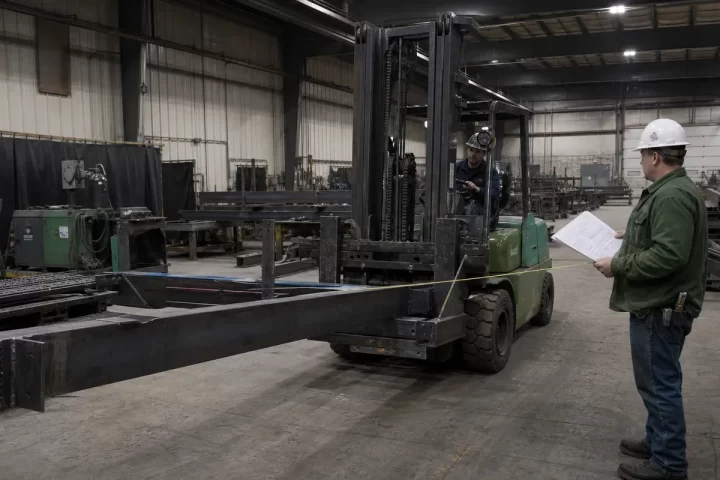
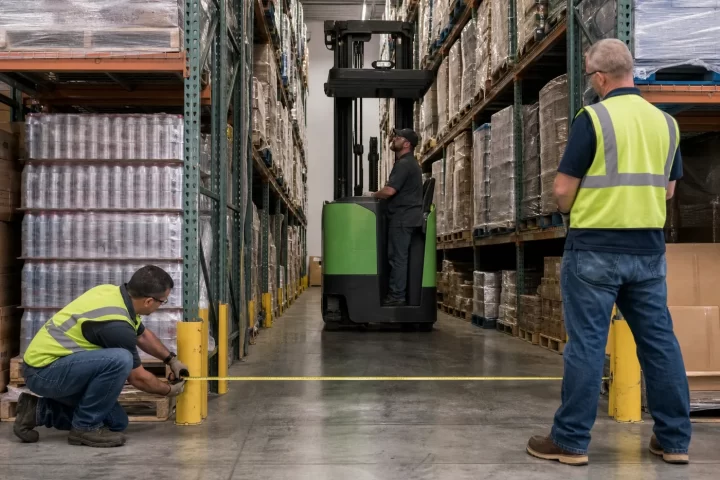
Measure rack-to-rack aisle width, intersecting aisles, door openings, dock plates, trailer interiors and any low overhead areas. Record the maximum pallet width and depth. A reach truck may work beautifully in storage but need a counterbalance partner at receiving; an articulated truck may combine jobs if its capacity and surface limits fit.
A food distributor deciding whether to narrow aisles
Picture a food distributor adding pallet positions without expanding the building. The team can narrow several aisles, but the current sit-down forklifts will no longer turn comfortably. Reach trucks offer familiar high-bay performance, while an articulated truck may travel from dock to rack and reduce handoffs. Cold-room doors and battery strategy complicate the choice.
The warehouse should model throughput, not just pallet count. Extra storage has little value if every put-away move requires congestion, equipment changes or longer travel. A short operational test with the real pallet is worth more than a brochure turning radius.
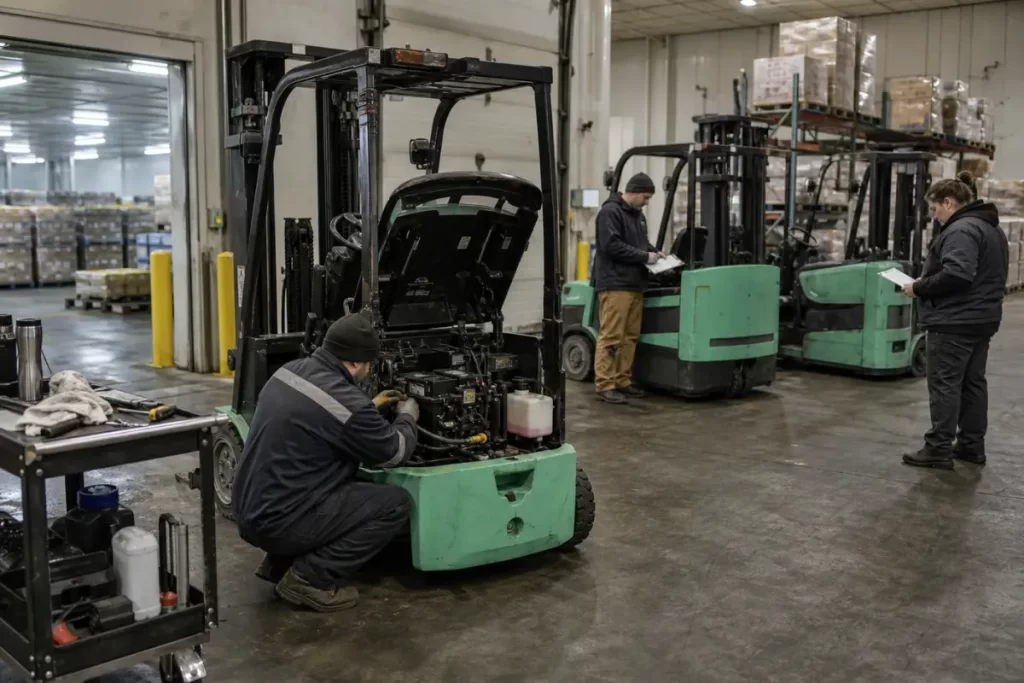
Counterbalance trucks are versatile
Sit-down counterbalance forklifts are comfortable around docks, trailers and general pallet movement. They usually need more stacking aisle than narrow-aisle equipment.
Reach trucks favor dense rack storage
Reach trucks place pallets high while keeping a compact chassis. Confirm floor flatness, residual capacity, rack clearances and whether the truck must leave the warehouse.
Articulated forklifts combine a pivot with a mast
An articulated truck can work in very narrow aisles and may support dock-to-stock travel. Operator familiarity, service support and the exact aisle geometry deserve attention.
Three-wheel electrics fill an important middle ground
A three-wheel electric counterbalance truck turns tighter than many four-wheel trucks while retaining familiar dock capability. It can be a sensible compromise where aisles are tight but not truly VNA.
Throughput belongs in the decision
Count pallet moves by hour, travel distance, congestion points and battery or fuel interruptions. Storage density and handling speed must be evaluated together.
Questions worth asking before you choose
- What clear stacking aisle does the proposed model require with our pallet?
- What capacity remains at the top rack beam?
- Can the truck safely enter our trailers and cross dock plates?
- What floor tolerances or guidance systems are required?
- Can we test the machine in our actual aisle?
What a useful proposal should make clear
A useful equipment proposal identifies the actual model or model family, capacity at the required height, mast and tire configuration, power package, attachments, condition, hours, warranty, freight, delivery timing and what service support is included. Put exclusions beside the price. That is the only dependable way to compare two offers that look similar on the first page.
A practical next step
Compare the relevant reach truck, articulated forklift and counterbalance specifications before requesting warehouse forklift prices.
Frequently asked questions
Are reach trucks only for narrow aisles?
They are designed for warehouse rack work and high lift, but the exact aisle requirement varies by model, load and rack layout.
Can an articulated forklift replace a counterbalance truck?
Sometimes, particularly in dock-to-stock operations, but verify dock, surface, capacity and service requirements.
How much clearance should a warehouse allow?
Use manufacturer stacking calculations with the actual load and add a practical operating allowance; do not plan to the theoretical minimum alone.