
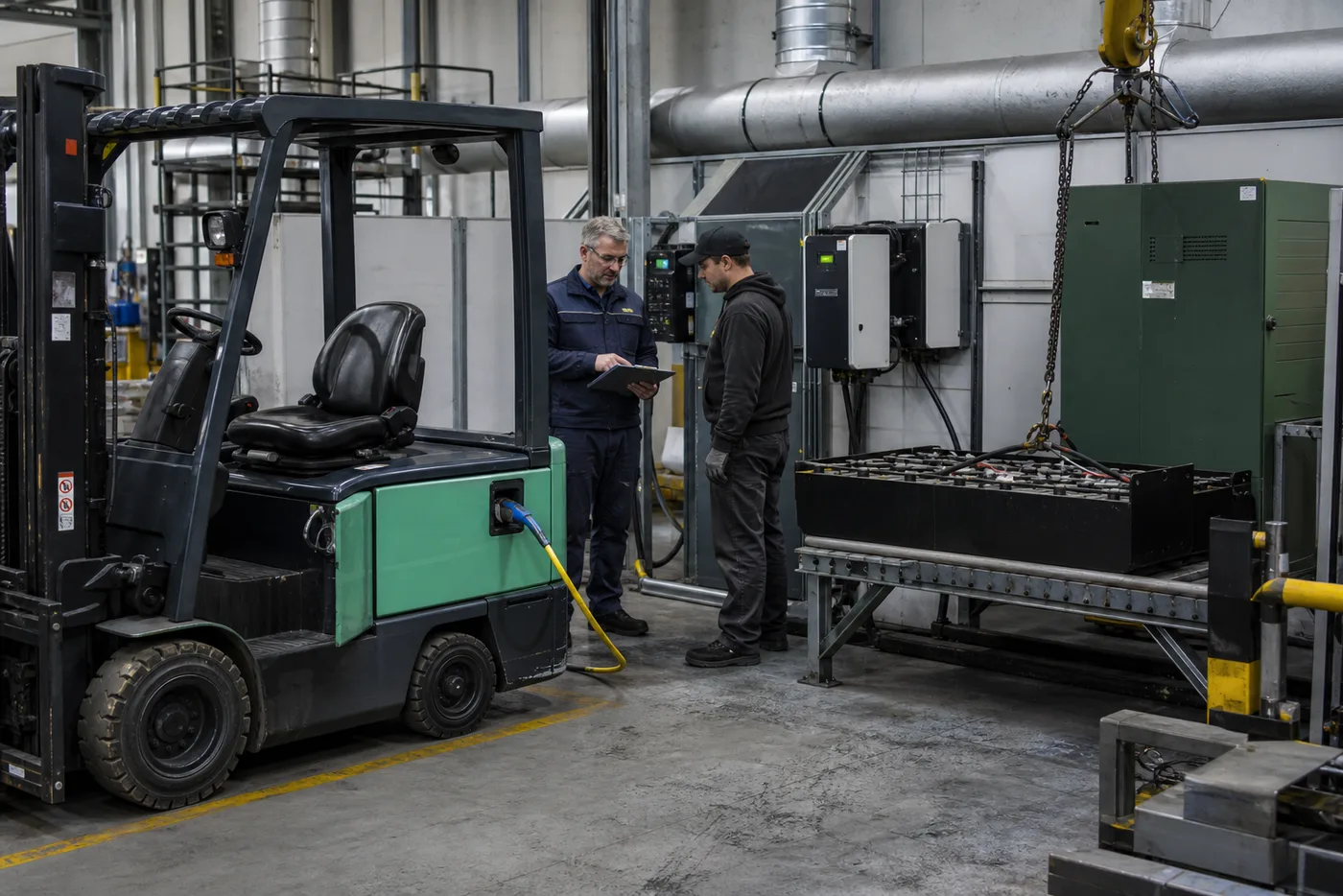
Forklift battery selection affects more than truck runtime. It changes charging space, electrical demand, operator routines, maintenance labor, shift planning and how consistently the fleet is available.
Compare chemistry only after modeling the application. The current electric forklift shortlist, approved battery options and charger specifications must be evaluated as one system.
Lead-acid is established but process-dependent
Flooded lead-acid batteries can be economical when watering, equalization, cooling, ventilation and charging are consistently managed. Multi-shift operations may require battery changing and dedicated space. Poor maintenance or insufficient cooling shortens life and undermines the expected cost advantage.
Lithium-ion supports a different charging model
Lithium-ion systems commonly support opportunity charging and eliminate watering. That can reduce battery-changing labor and space. The benefit depends on break timing, charger availability, electrical capacity, battery management and the manufacturer-approved pairing with the truck.
Model energy across the entire day
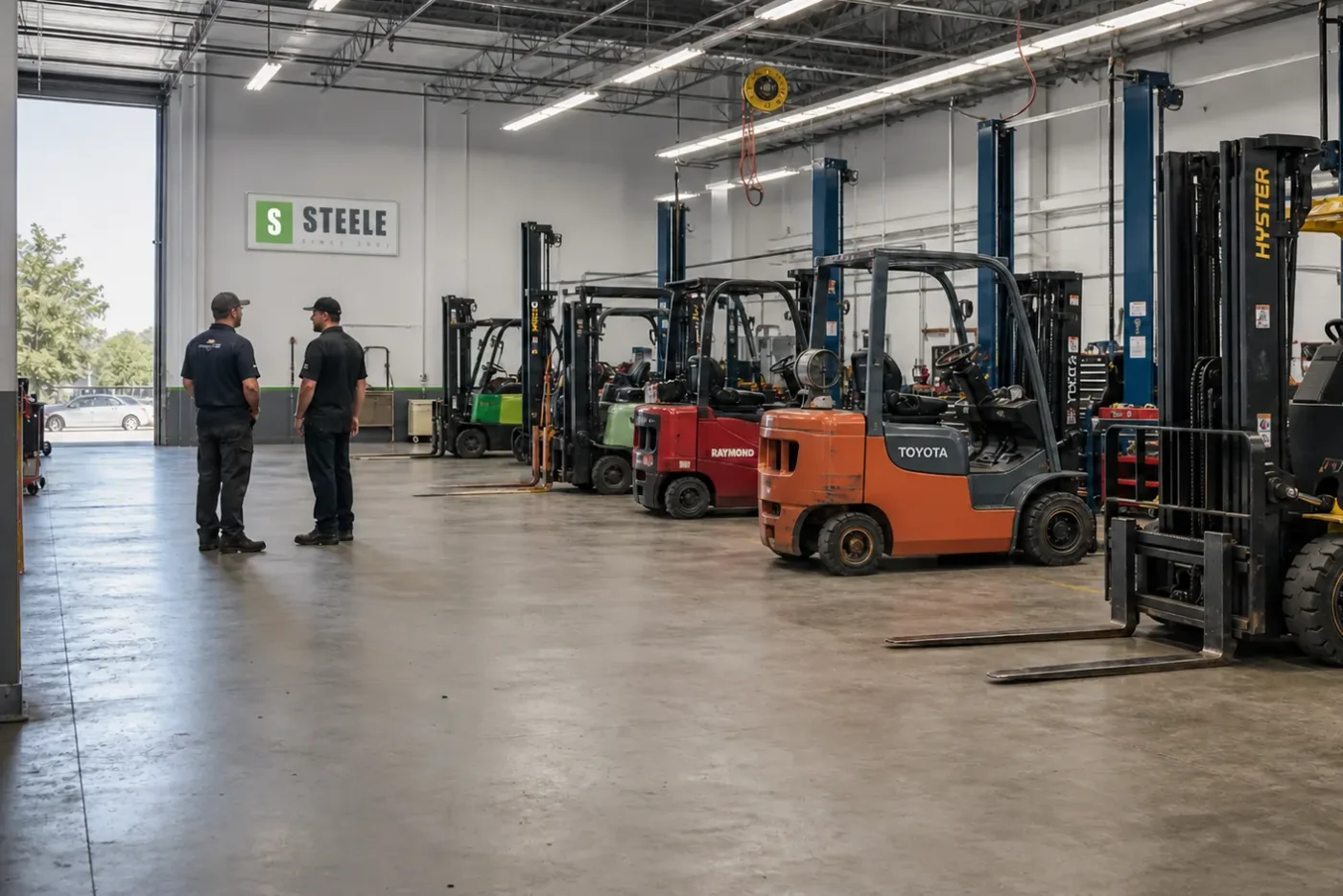
Estimate energy consumption by truck, shift and peak period rather than using average fleet hours. Identify when equipment can connect to chargers and whether simultaneous charging creates an electrical-demand issue. Leave operating margin for colder temperatures, attachments and heavy travel.
Include facility and safety requirements
Review charger locations, cable management, ventilation, eyewash and spill controls where applicable, fire and emergency planning, impact protection and housekeeping. Engage qualified electrical and safety professionals for the chosen system and local requirements.
Compare lifecycle cost with documented assumptions
Include battery and charger price, expected life, maintenance labor, energy, battery-change equipment, space, electrical upgrades and productivity. Sensitivity-test the result if hours, energy rates or shift patterns change. A chemistry is not universally best; the operating system around it creates the result.
Battery planning inputs
- Energy demand by truck and shift.
- Available charge windows and charger count.
- Electrical service and demand constraints.
- Temperature, sanitation and ventilation needs.
- Maintenance labor, space and expected lifecycle.
Frequently asked questions
Can lithium forklift batteries be opportunity charged?
Many are designed for it, but use the manufacturer-approved battery and charging strategy.
Do lead-acid batteries need watering?
Flooded lead-acid batteries typically require a controlled watering and maintenance program.
Can I retrofit lithium into any forklift?
Do not assume so. Truck, battery, charger, communications, counterweight and approvals must be compatible.
Which battery is less expensive?
The answer depends on acquisition, utilization, infrastructure, labor, energy and expected life.
A fleet-energy review through Steele Forklift’s electric forklift request can help organize the truck, battery and charger comparison.